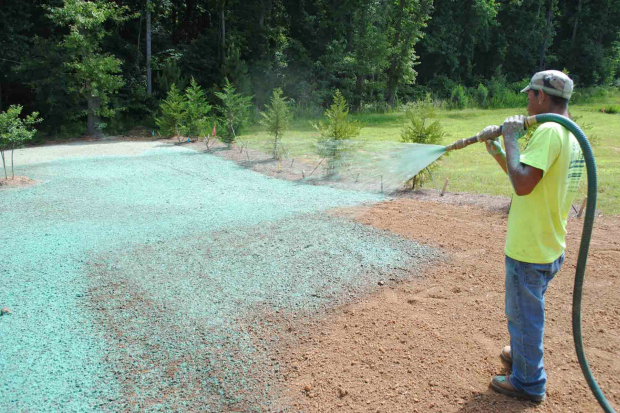
COUNCILLORS have approved a proposal to introduce hydro-seeding as part of Bahrain’s national afforestation and landscape beautification strategy.
The initiative, titled ‘Using Hydro-Seeding Technology for Beautification and Reforestation of Open and Eroded Areas’, was presented by Northern Governorate constituency 11 (southern Hamad Town and Dar Kulaib) representative Abdulla Ibrahim Al Thawadi.
Approved unanimously by the Northern Municipal Council yesterday, the move calls for the adoption of an eco-friendly and cost-effective planting method that involves spraying a mixture of water, seeds, fertilisers, organic fibres and natural adhesives directly onto the soil using special equipment.

Mr Al Thawadi
“This technology allows us to green large, barren spaces quickly and efficiently,” said Mr Al Thawadi, who also chairs the council’s information and public relations committee.
“Hydro-seeding has proven successful worldwide in combating soil erosion and restoring degraded lands. By adopting it locally, we can accelerate our efforts to expand green spaces, protect the environment and enhance Bahrain’s urban landscape.”
Hydro-seeding is widely used for creating lawns, stabilising soil and preventing erosion on slopes and embankments. Compared to traditional planting or laying pre-grown turf, it is faster, less labour-intensive and more cost-effective. The technique is also well-suited to arid and semi-arid climates when the right plant seed mixtures are selected.
Some of the benefits of hydro-seeding include: achieving excellent results in preventing erosion and maintaining soil moisture, restoring vegetation cover in degraded or exposed areas, ensuring dense and sustainable plant growth, rapid coverage of large areas within a short time, reducing overall costs compared to traditional grass planting or turf installation, enhancing the visual appeal of public spaces while promoting real environmental sustainability, providing an effective method for soil stabilisation on slopes and hillsides, and supporting the objectives of Bahrain’s National Greening Plan.
“By integrating innovative technologies like hydro-seeding into our greening efforts, we can transform open lands into thriving ecosystems,” said Mr Al Thawadi.
“This proposal is not just about beautification, it’s about creating a sustainable future for our cities and our environment.
“The move underscores the council’s broader commitment to adopting modern environmental management practices and supporting Bahrain’s long-term vision for a greener, more sustainable urban landscape,” he added.

Ms Al Durazi
The council’s services and public utilities committee, chaired by Zainab Al Durazi, endorsed the initiative and recommended that it be formally submitted to the minister concerned for approval.
“This proposal is both practical and forward-looking,” she said.
“It aligns with Bahrain’s environmental sustainability goals and the national drive to expand green coverage.
“Hydro-seeding will allow municipalities to rehabilitate large tracts of land that are currently vulnerable to erosion or visually neglected – all at a fraction of the cost and time of traditional methods.”
Ms Al Durazi added that the committee’s review confirmed the technology’s adaptability to Bahrain’s climatic conditions, provided that seed mixtures suitable for hot and dry environments are selected.
The council’s recommendation will now be forwarded to Municipalities and Agriculture Affairs Minister Wael Al Mubarak for further consideration.
mohammed@gdnmedia.bh