

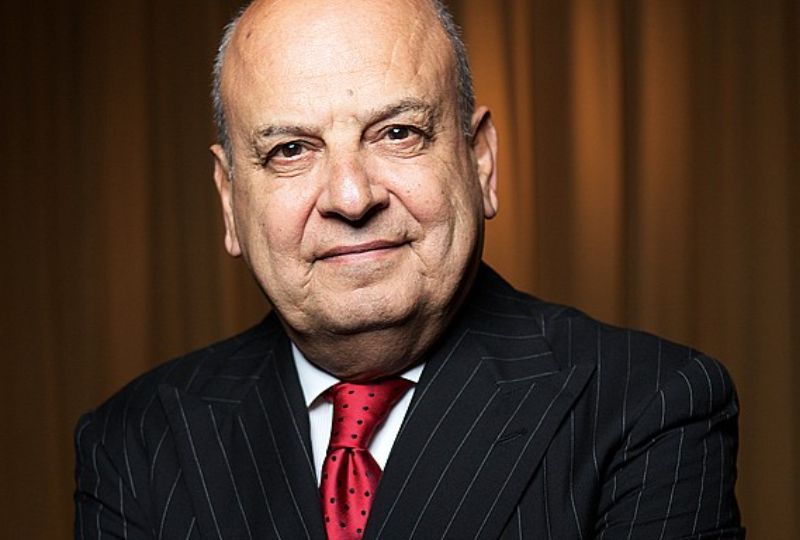
I recently had an insightful discussion with my sister, Baria Alamuddin Miknas, the distinguished journalist who has been following the Manama Dialogue for more than 21 years.
Our conversation centred on the key messages and ideas emerging from this year’s edition, and we both agreed that the Manama Dialogue continues to be one of the most influential events reinforcing Bahrain’s standing as a nation that prioritises regional security and stability.
This role is particularly vital in an era defined by geopolitical tension, uncertainty and rapid global change.
The Manama Dialogue stands out not only for its significance as a regional and international platform but also for what it embodies: the global community’s trust in Bahrain’s ability to lead thoughtful and responsible discussions on the challenges and transformations shaping the region.
Over the past two decades, it has evolved into one of the most prominent strategic gatherings in the Middle East, a forum where ideas take shape, perspectives are tested and bridges of co-operation are built.
It provides participants with the space to rethink the future and to anticipate what lies ahead rather than simply responding to events as they occur.
This year, I followed the sessions of the Manama Dialogue with particular interest.
The event offered a comprehensive view of the complex political and non-political developments unfolding across the region and the world. It provided an insightful perspective to understand the transformations that lie ahead. Alongside the traditional discussions on regional conflicts and political alliances, there was a notable focus on economic security, technological advancement, energy issues and unconventional threats that will likely define the next decade. In essence, the dialogue was not confined to the present; it was a forward-looking conversation about the future.
I paid particular attention to the remarks of US Special Envoy Tom Barrack on the Lebanese situation, whose tone suggested involvement rather than neutrality, revealing the complexity of a conflict that calls for balanced resolution.
Equally notable were the candid insights of former Saudi intelligence chief Prince Turki Al Faisal, who described Oman as a safe and unifying refuge within the Gulf Co-operation Council while stressing the importance of maintaining its Gulf alignment to preserve strategic balance amid growing challenges.
The participation of Syrian Foreign Minister Asaad Al Shibani also marked a turning point in regional dynamics, offering a glimpse into Syria’s evolving political direction and reaffirming the strength of Syrian-Bahraini relations through continued Bahraini investments, reflecting a shared commitment to deeper collaboration and regional openness.
The sessions of the Manama Dialogue further underscored the global economic transformations currently underway and the critical role of the GCC in leading this transition.
The discussions shed light on strategies for economic diversification, the advancement of key growth sectors such as technology and renewable energy and the importance of investing in human capital.
These themes reflect a deep awareness that the true strength of nations today lies not in military strength, but in their capacity to foster resilient and prosperous economies that provide stability, opportunity and well-being for their citizens while minimising internal pressures that could evolve into broader security concerns.
Manama Dialogue 2025 rose above its traditional political boundaries to serve as a forward-looking platform that envisions the future.
It showcased Bahrain’s confidence in its pivotal role and reflected the international community’s trust in this small yet influential nation’s ability to steer meaningful discussions on security, the economy and regional equilibrium.
At a time when global powers are competing for influence and the region is searching for safe and sustainable paths ahead, the significance of such dialogue has never been more evident. It stands as a powerful reminder that genuine solutions are forged at the negotiating table, not on the battlefield.
akram@fp7.com
&uuid=(email))