Bahrain’s government spends up to BD24,600 per student over a 12-year education cycle, it has been revealed.
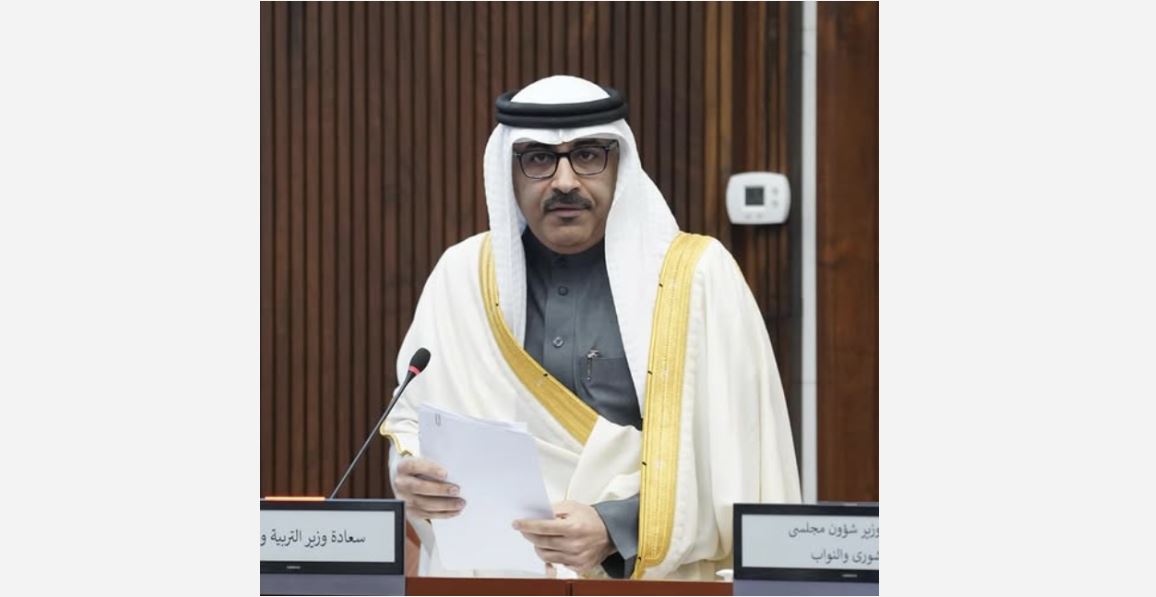
Education Minister Dr Mohammed Mubarak Juma told MPs yesterday that the annual cost of educating a student in government schools is BD1,770.71, bringing the total to BD21,248.48 over 12 years.
He highlighted the three different methodologies adopted by the ministry to calculate the cost per student, depending on the scope of expenditure.
“The first mechanism, which the ministry currently adopts, calculates only the amounts spent directly on items and services that are closely related to the student,” Dr Juma explained. “Under this approach, the annual cost is BD1,770.71.”
He noted that when operational costs are added under the second mechanism, the figure rises to nearly BD1,800 per year, exceeding BD22,000 over 12 years.
“In the third calculation method, all education budget items are included, such as school construction and maintenance,” the minister said. “In this case, the cost per student reaches BD2,000 annually, amounting to approximately BD24,600 over a 12-year education cycle.”
Dr Juma also revealed that government schools currently include around 5,000 classrooms within integrated facilities, alongside 860 mobile classrooms, representing 14 per cent of the total number of classrooms nationwide.
He said the cost of constructing a single mobile classroom is approximately BD12,500, stressing that these units are no longer made of wood as in the past.
“Today’s mobile classrooms are built to modern standards. They are air conditioned, sound-insulated and designed as modular units,” he explained.
Responding to claims that government schools may start collecting fees, the minister said such a proposal would violate the constitution.
“The Constitution of the Kingdom of Bahrain clearly states that education in government institutions must be free,” he said.
He emphasised that private schools remain an option for parents, while many government schools already offer high-quality education.
“There is no governorate in Bahrain that does not have model government schools at the primary, intermediate and secondary levels,” he said.
Dr Juma highlighted plans to construct 18 new schools across all governorates. In addition, the ministry plans to build 23 new academic buildings within existing schools that still have available capacity, with the aim of completely eliminating prefabricated classrooms.
“This is alongside the rehabilitation of old and historic schools and bringing them back into service,” he added.
He revealed that tenders for four new schools – two in Salman Town and two in East Hidd – are expected to be floated this month or early next month.
“Construction is scheduled to begin in the first quarter of 2026, with completion expected within two years,” he said.
Meanwhile, Parliament’s public utilities and environment affairs committee chairman MP Mohammed Al Bulooshi called for the creation of additional model government schools that charge affordable fees – offering a middle ground between free public education and costly private schooling.
He proposed that these schools be managed by the ministry and feature smaller class sizes than standard government schools, providing parents with a high-quality yet affordable option.
“This approach would balance quality and affordability while staying aligned with national education goals,” he added.
mohammed@gdnmedia.bh