

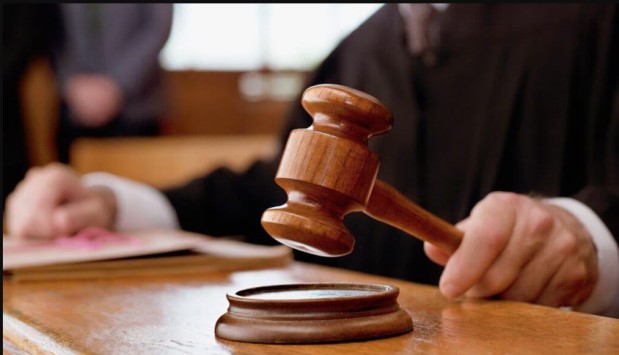
Two expatriates who used stolen bank cards to pay off utility bills worth BD1,854 have been sentenced to three years in prison and fined BD1,000.
The defendants – identified as an Arab and an Asian – were convicted by the High Criminal Court of fraud.
One of them was earlier sentenced to three years in prison and fined BD1,000 in another similar case.
The court heard that the men approached apartment residents at random, posing as document clearance officers and claiming they could offer discounted rates on their utility bills.
They gained access to the Electricity and Water Authority (EWA) accounts of four individuals and paid off their bills on EWA’s online portal over 12 transactions.
The EWA subscribers would send the cash directly to the defendants, who would take it for themselves and use the stolen bank cards to fulfil their end of the bargain.
The payment processor that powers EWA’s online billing portal flagged the transactions as ‘suspicious’, and they were reported to authorities by a fraud‑detection employee, ultimately leading to the defendants’ arrest.
Judges found the two defendants guilty of misusing another person’s electronic signature – their PIN – for a fraudulent purpose, and managing to steal their funds through this method. They were also convicted of using a computer system to gain unlawful access into others’ bank accounts, and using their bank card PIN without the consent of the card owner.
Case files show that the payment processor discovered 12 transactions, worth a total of BD1,854, and flagged them as potentially fraudulent after receiving letters from the banks which issued the cards, asking for a refund.
The cards’ owners had contested the charges with their banks, stating that they did not make these payments.
It appeared that these payments settled the bills of four accounts on EWA’s system, belonging to a Bahraini woman and three expats.
A witness explained to prosecutors that the payment processor transfers the money from a customer’s card to EWA for a small percentage of each transaction’s value.
The Bahraini woman testified that the Asian defendant began paying her utility bills – a process she entrusted to him – after he claimed to be a document clearance specialist offering discounted services.
The second victim, who runs a business owned by his wife, said he delegated the payment of utility bills on the commercial registration (CR) record to the Arab defendant.
The third victim retired from a real estate management company, which rents out his apartment to him. He recounted that the Arab man approached him, claiming that he could get EWA bills cleared at a lower rate and so he agreed to let him pay in his stead.
He provided him with the account’s number, and the defendant sent him receipts that the utilities were paid for. The witness later correctly identified the defendant in a photo line-up.
The fourth beneficiary also received proof from the Arab man that he paid a bill worth BD154 to the EWA.
A review of the Asian suspect’s criminal record showed that he had previously received an identical sentence, including permanent deportation, after being convicted of using stolen bank cards to pay EWA bills.
The Arab defendant himself admitted to settling these bills in Public Prosecution questioning. His criminal record shows he was convicted in two cases in which he committed crimes with a similar method.
In a voice message to one of his marks, which was used as evidence, he said: “I will give you
&uuid=(email))