


A proposal to update Bahrain’s decades-old medical law and introduce clearer regulations governing abortion, under strictly defined circumstances, will be debated by the Shura Council on Sunday.
It seeks to introduce a carefully regulated exception allowing abortion in cases where the foetus is diagnosed with severe deformities that make survival after birth impossible.
Under the proposal, abortion would only be permitted in two circumstances: if the pregnancy poses a serious risk to the mother’s life or if medical specialists confirm that the foetus suffers from severe abnormalities incompatible with life after birth.
The draft legislation, proposed by five members led by woman and child committee vice-chairwoman Leena Qassim, aims to amend provisions of the 1989 decree law regulating the practice of human medicine and dentistry in Bahrain.
According to a report prepared by the Shura Council services committee, the amendment seeks to modernise Bahrain’s healthcare legislation in line with advances in medical science while maintaining strict safeguards that protect both the mother and unborn child.
The services committee stressed that the proposal does not alter the fundamental legal principle that abortion is generally prohibited. Instead, it maintains the restriction while allowing limited exceptions under strict medical and procedural controls.
The procedure would be subject to a number of safeguards, including medical reports issued by specialised committees, written and informed consent, and a strict time limit stipulating that the pregnancy must not exceed 120 days.
“Our current legal framework dates back to 1989, a time when medical diagnostics were far less advanced than today,” Ms Qassim said.
“This proposal aims to update the legislation in a responsible and balanced manner so that it keeps pace with medical developments while ensuring that strict safeguards remain in place to protect both the mother and the unborn child.”
Services committee chairwoman Dr Jameela Al Salman, also a co-signee, said the proposal was designed to strike a careful balance between medical necessity and the protection of life.
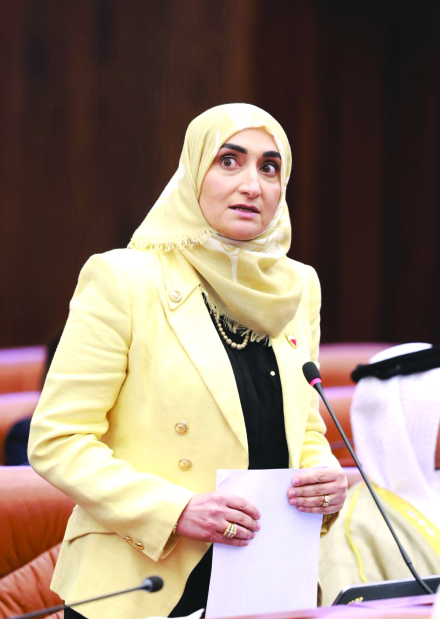
Dr Al Salman
“The proposal does not grant an open right to abortion, nor does it weaken the legal protection afforded to the unborn child,” she said.
“It simply provides a tightly regulated legal framework to address exceptional medical cases where continuing the pregnancy would lead to unavoidable suffering for the mother and her family.”
Dr Al Salman added that the amendment also aims to ensure such sensitive cases are handled within Bahrain’s healthcare system under proper supervision.
“Providing a clear legal and medical framework within the kingdom ensures that families can receive the necessary care under strict oversight, rather than seeking solutions abroad,” she added.
The services committee noted that the proposal aligns Bahrain’s legal framework with comparable legislation in other Gulf countries such as the UAE, Qatar, Oman and Kuwait, where abortion is permitted only in tightly regulated medical circumstances.
Following its review, the panel concluded that the proposal is constitutionally and legally sound and recommended that the council proceed with further legislative consideration.
Read more:
Residential tower and two hotels hit by Iranian attacks
Most British residents opt ‘to shelter in place’
UK praises Bahrain’s steps to ensure safety
WE’RE PREPARED: HRH Prince Salman visits the General Directorate of Civil Defence and the National Centre for Civil Emergency Management
Parents urged to monitor children’s online activities
&uuid=(email))