

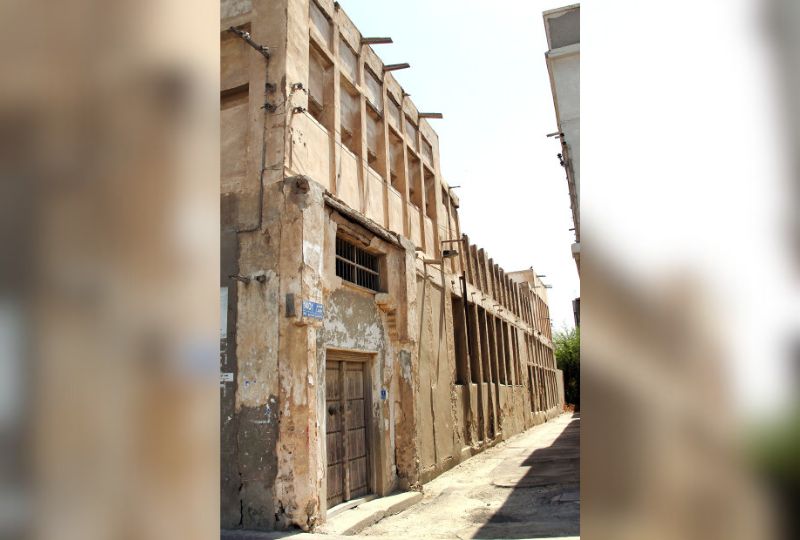
Authorities are intensifying efforts to tackle dilapidated and abandoned houses in Old Muharraq, following safety concerns raised by residents and legislators, with 34 such properties identified over the past three years.
Municipalities Affairs and Agriculture Minister Wael Al Mubarak said municipalities were conducting regular inspections and legal procedures to address unsafe buildings in Muharraq Governorate’s Fourth Constituency, represented by MP Hisham Abdulaziz Al Awadhi.
The area includes parts of historic Old Muharraq, home to the internationally recognised Unesco World Heritage Site Pearling Path and the Qaysariyah Market.
The minister was responding to a parliamentary question from Mr Al Awadhi regarding the threats posed by abandoned and structurally unsafe buildings in the district.
Mr Al Mubarak explained that under Bahraini law, the responsibility for maintaining private property lies primarily with its owners.
“The existence of dilapidated houses is generally the result of their owners failing to take the necessary measures to repair them in a way that ensures their structural integrity and prevents them from deteriorating to this stage,” he said.
He noted that private properties are protected under the Constitution, meaning owners retain the right to manage their properties but must comply with municipal regulations when carrying out repairs, alterations or demolition.
“No building may be constructed, modified, demolished or structurally altered without obtaining the necessary permits from the municipality,” he explained.
The minister said municipalities conduct periodic inspection campaigns in older neighbourhoods such as those in Muharraq to identify buildings that may pose a risk.
He explained that under municipal regulations, authorities can take action once buildings are identified as structurally unsafe.
“When a building is found to be in a critical structural condition or at risk of collapse, the relevant authorities are contacted to cordon off the surrounding area until administrative and legal procedures are completed,” he said.
The first step usually involves notifying property owners and requiring them to carry out repairs to prevent further deterioration or collapse.
Mr Al Mubarak said a building is classified as dilapidated based on an engineering assessment by municipal specialists.
“These assessments are based on the visible structural condition of the building, including deep cracks in beams and columns. The age of a building alone is not the determining factor.”
According to ministry statistics, 34 dilapidated properties were identified in the fourth constituency between 2023 and 2025.
- 13 properties had their status modified through demolition or restoration.
- 11 properties were subject to legal action and 10 are currently under procedural review.
- Ownership verification is ongoing for some properties in co-ordination with other authorities
“These measures form part of the ministry’s efforts to ensure the safety of residents and protect lives and property,” Mr Al Mubarak said.
The minister also highlighted financial support options available to property owners to help repair ageing homes.
Owners of dilapidated houses can apply for loans through the Housing Bank, while residents may also benefit from the Cities and Villages Development Project. The programme helps improve structural conditions in older neighbourhoods through renovation or rainwater insulation works.
“During the past three years, approximately 141 houses in Muharraq Governorate have benefited from the project,” Mr Al Mubarak said. Of these, 95 houses were renovated and 45 had rain insulation installed.
The minister stressed that the municipality would continue surveying older districts in Muharraq and updating records whenever buildings show signs of structural deterioration.
“Property owners are required to take the necessary measures to address structural damage and avert any danger,” he said.
mohammed@gdnmedia.bh
&uuid=(email))