

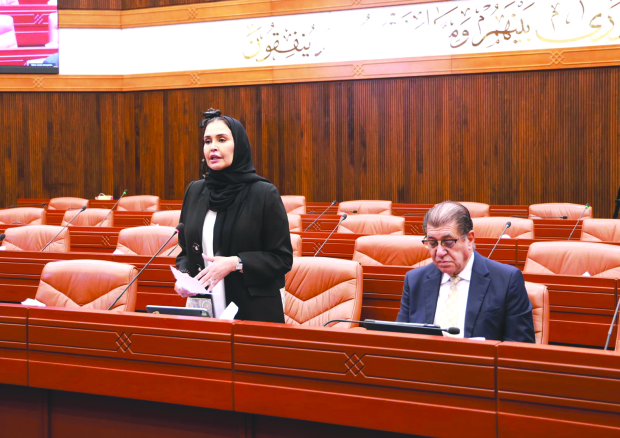
Bahrain is moving closer to updating its decades‑old medical laws, following the Shura Council’s unanimous approval of a proposal to permit abortion only in rare and strictly regulated medical circumstances.
The proposal – which amends provisions of Decree-Law No 7 of 1989 regulating the practice of human medicine and dentistry – has now been referred to the government to draft into a formal law before returning to Parliament and the Shura Council for final approval.
It was submitted by woman and child committee vice-chairwoman Leena Qassim, Shura second vice-chairwoman Dr Jihad Al Fadhel, legislative and legal affairs committee chairwoman Dalal Al Zayed, services committee chairwoman Dr Jameela Al Salman and Dr Ahmed Al Arrayedh.
Under the proposal, abortion would remain generally prohibited but would be allowed under narrowly defined conditions – including when the pregnancy poses a serious risk to the mother’s life or when medical specialists confirm that the foetus suffers from severe deformities incompatible with life after birth.
Dr Al Salman said the proposal was designed to reflect advances in medical science while ensuring that abortion remained limited to exceptional cases.
“International statistics show that around six per cent of births involve severe congenital deformities that make life impossible,” she said.
“Our proposal does not expand abortion. It restricts it to extremely specific cases where the deformity is severe and survival is impossible.”
She explained that the proposal sets strict safeguards, including medical reports issued by a specialised committee of three consultants in obstetrics, paediatrics and related fields.
“We have also set a time limit, required the consent of both parents and stipulated that the procedure must take place in a licensed medical institution,” Dr Al Salman said.
She added that religious guidance had also been sought before presenting the proposal.
“We requested the opinion of the Supreme Council for Islamic Affairs and reviewed religious rulings issued in countries such as Egypt, Saudi Arabia and Jordan.”
Dr Al Fadhel said abortion remained a sensitive issue socially and ethically, which required careful legislative treatment.
“Advances in medical technology now allow early detection of severe foetal abnormalities,” she said.
“The proposal allows abortion only under strict medical and legal procedures when doctors confirm that the foetus suffers from abnormalities that make continued life impossible.”
She said the amendment would also help ease the emotional burden faced by families in such circumstances.
“Our current law dates back to 1989, and since then medical science has witnessed enormous progress that requires legislative updates,” Dr Al Fadhel said.
Ms Al Zayed said the committee consulted the Supreme Council for Islamic Affairs, the Supreme Council for Women, the Health Ministry and the National Institution for Human Rights and none of the entities objected to the proposal.
She added that Islamic scholars had confirmed the permissibility of abortion in certain circumstances.
“The Supreme Council for Islamic Affairs stated that abortion may be allowed if the pregnancy endangers the mother’s life,” Ms Al Zayed said. “It also confirmed that the procedure must not take place after 120 days of pregnancy, which aligns with the widely accepted Islamic view that the soul is breathed into the foetus after that period.”
&uuid=(email))