

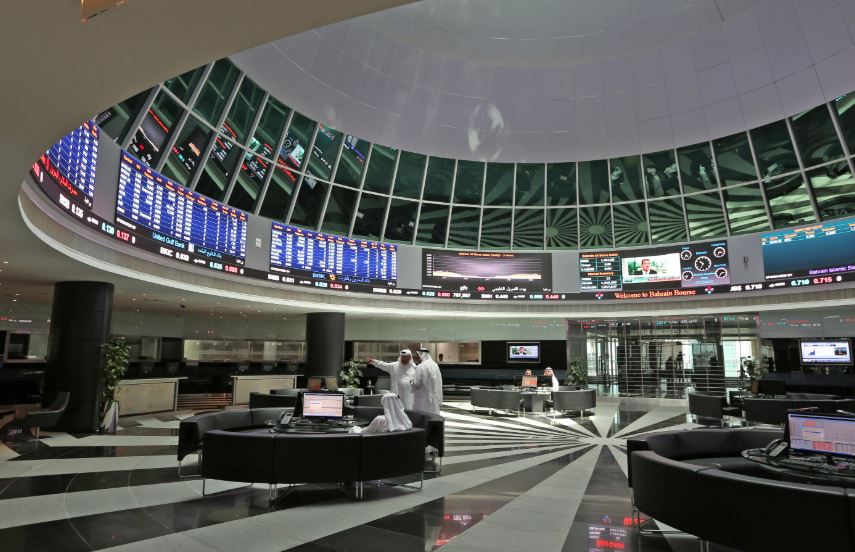
Bahrain All Share Index closed at 1,888.26 points yesterday, marking an increase of 11.56 points above the previous closing.
This increase was due to the rise in the financial, industrial and material sectors.
Bahrain Islamic Index has closed at 926.26 points, marking an increase of 17.55 points above the previous closing.
Results indicated that 145 equity transactions took place with a volume of 1,370,893 worth BD530,495.
Investors traded mainly in the material sector, representing 44.43 per cent of the total value of securities traded.
Gulf stock markets ended higher yesterday after the US and Iran agreed to a fragile two-week ceasefire deal, which includes the immediate and secure reopening of the Strait of Hormuz.
The ceasefire announcement has been well-received and UAE equity market fundamentals remain strong, said Tariq Qaqish, deputy CEO at FH Capital. But higher risk levels are increasing the discount rate used to value capital markets, which may put pressure on valuations, he added.
Dubai’s main market surged 6.9pc in its biggest intraday gain since March 2020, buoyed by a 13pc jump in blue-chip developer Emaar Properties and an 11pc rise in top lender Emirates NBD Bank. Among other gainers, budget airline Air Arabia soared 10.8pc.
Dubai’s main index has been the worst performer among its regional peers recently, dropping more than 16pc in March as the conflict continued.
Late last month, Dubai approved $272.34 million in economic facilitation measures to support businesses for a period of three to six months starting April, the Dubai Crown Prince said on X on Monday.
Abu Dhabi’s benchmark index climbed 2.9pc, with its largest lender First Abu Dhabi Bank rising 5pc and real estate giant Aldar Properties soaring 10.1pc. Energy firm Adnoc Gas gained 3.5pc, while Abu Dhabi Ports Company advanced 11.1pc. Qaqish said he expected the UAE government to keep supporting the economy through aid for banks, small and medium enterprises and new measures to restore confidence.
In Qatar, the index rose 3.7pc as all its constituents advanced, with the Gulf’s biggest lender, Qatar National Bank, climbing 4.2pc. Petrochemicals maker Industries Qatar rose 5.8pc, while Qatar Gas Transport was the top gainer, climbing 8.1pc.
The prospect of a reopened Strait of Hormuz has removed part of the extreme tail risk markets had been pricing in, prompting a rebound in regional equities, said Ahmad Assiri, Research Strategist at Pepperstone.
But this looks more like tactical repositioning than fresh inflows, he said, adding that while sentiment has improved, conviction remains limited and the durability of the rally will depend less on valuations and more on whether the conflict continues to de-escalate.
Saudi Arabia’s benchmark index ended 2.3pc higher, led by a 2.8pc rise in Al Rajhi Bank. Budget airline Flynas closed 8.9pc higher. Unlike its regional peers, the Saudi stock market was the least affected during the war.
The rise in global oil prices generated substantial financial gains for Iran, Oman and Saudi Arabia, while costing states without alternative export routes billions of dollars, a Reuters analysis found.
Saudi energy stocks, meanwhile, gave back part of their recent gains, with oil major Saudi Aramco falling 2.8pc after rising more than 10pc since the conflict began. The Saudi energy index dropped 1.9pc. Boursa Kuwait added 1.7 pc.
&uuid=(email))