

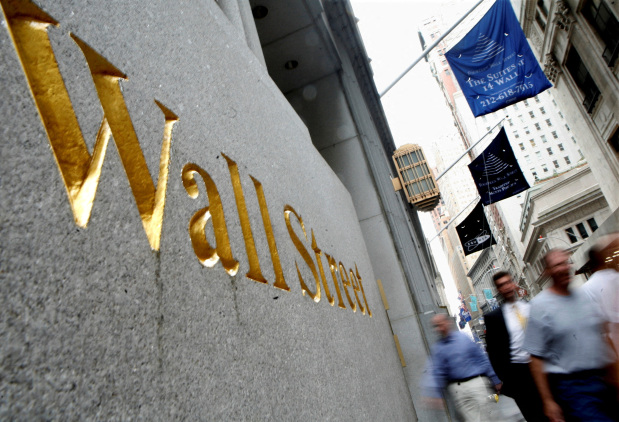
Wall Street’s stock benchmark S&P 500 followed world shares higher and oil prices stayed well below $100 a barrel yesterday after US President Donald Trump said talks to end a war with Iran could resume over the next two days.
On Wall Street, the Dow Jones Industrial Average fell 0.43 per cent to 48,329.22, the S&P 500 rose 0.35pc, to 6,991.53 and the Nasdaq Composite rose 0.93pc to 23,858.36.
“Equity markets, especially in the United States, have rallied back pretty aggressively showing a decent amount of confidence that this is probably over, or close to the end,” said David Seif, chief economist for developed markets at Nomura, referring to “the supply disruption that comes from Hormuz being closed.”
The MSCI All-Country World Index rose 0.32pc, to 1,057.95.
European shares had a rougher ride, falling 0.41pc.
Oil prices started the sessions broadly stable after steep falls during Tuesday’s session, as the continued closure of the Strait of Hormuz countered optimism about peace talks.
A surprise draw on US weekly crude storage pushed US crude up 1.33pc to $92.44 a barrel, while Brent rose to $95.37 per barrel, up 0.66pc on the day.
Major bank earnings came in strong. Bank of America shares rose 1.6pc after the second-biggest US lender reported growth in first-quarter profit. Morgan Stanley climbed 4.4pc after it also reported a jump in first-quarter profit.
Investor optimism over a swift cessation of hostilities has also lent some support to US Treasuries, which had suffered recently on worries about inflation. The two-year Treasury yield, which typically moves in step with expectations for the Federal Reserve’s next moves on interest rates, rose 2.3 basis points to 3.774. The 10-year yield was up 2.5 basis points to 4.282pc.
Disruptions to global energy markets from the Iran war have had more of an economic effect for European markets than for the US, which is a net energy exporter, Nomura’s Seif said.
“If you look at what has happened to bond prices in the US, Treasuries, versus in Europe, it hasn’t been good for US bond prices but it has been arguably a lot less negative,” Seif said.
The yield on benchmark German 10-year Bunds rose 1 basis point to 3.04pc, from 3.03pc late on Tuesday. The International Monetary Fund on Tuesday lowered its growth outlook and warned that the global economy would teeter on the brink of recession if the conflict worsens.
&uuid=(email))