

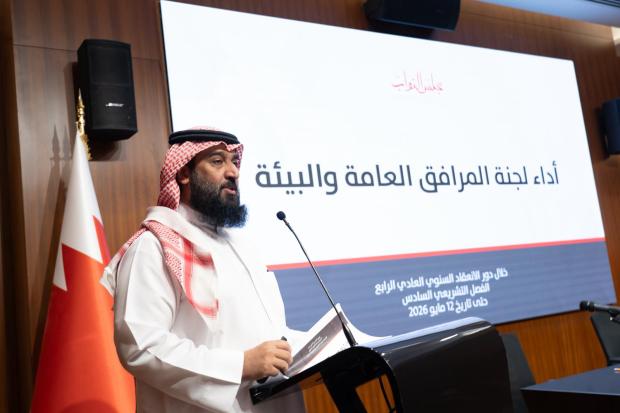
A sweeping new law to reorganise Bahrain’s electricity and water sector has landed in Parliament, promising the biggest structural shake-up in decades – including the abolition of the Electricity and Water Authority (EWA) and the creation of an independent regulator alongside a new national company to run operations.
The draft Electricity and Water Sector Regulation Law was referred by the government for parliamentary review, and is now under study by Parliament’s public utilities and environment affairs committee.
Committee chairman MP Mohammed Al Bulooshi said the proposed legislation aims to make the system ‘fairer, more transparent and more accountable to subscribers’.
“This law completely reorganises how electricity and water are produced, supplied, regulated and priced in Bahrain,” Mr Al Bulooshi said.
At the heart of the proposal is the dissolution of EWA and the establishment of an independent Electricity and Water Regulatory Authority, which will have exclusive powers to license operators, set technical and performance standards, approve tariffs and protect subscriber interests.
Alongside it, a National Electricity and Water Company will be formed to handle procurement, transmission, distribution and supply through specialised business units under the regulator’s oversight.
Mr Al Bulooshi revealed that MPs have already agreed on 10 amendments with the Electricity and Water Affairs Ministry, with the most sensitive issue being how tariffs are set.
“Electricity and water tariffs must be clearly included in the law,” he stressed. “They cannot be left to executive decisions. This directly affects every home in Bahrain and must be governed by legislation.”
Another major issue being pushed by MPs is the situation of compound families – multiple households living within a single property but billed under one meter.
“We want separate meters for compound families living in one home,” Mr Al Bulooshi explained. “It is unfair for several families to be charged under a single tariff bracket because of one meter.”
The law introduces a detailed licensing regime covering electricity and water production, transmission, storage, distribution, supply and even technical installation works. It also sets out strict penalties for illegal consumption, meter tampering and unlicensed activities, including imprisonment and heavy fines.
For the first time, the regulator will also oversee energy efficiency standards, carbon reduction policies, consumer service standards, and even energy services companies working to reduce consumption.
A transition plan will transfer all assets, liabilities, contracts and employees from EWA to the new national company without affecting staff benefits.
“This transition is carefully structured so services continue without disruption,” Mr Al Bulooshi said. “But at the same time, we are moving to a modern regulatory model used in advanced countries.”
The regulator will have powers of inspection, enforcement and even judicial police authority through designated officers, while also being tasked with ensuring stable supply, fair pricing and protection of consumer rights.
Mr Al Bulooshi said the committee views the law as a turning point.
“The goal is a system where subscribers are protected, tariffs are fair, services are efficient and accountability is clear,” he said. “This law lays the foundation for that future.”
&uuid=(email))