

US consumer inflation increased further in April, with the annual rate posting its largest gain in three years, heightening political risks for President Donald Trump and his Republican party ahead of November’s midterm elections.
The back-to-back rises in the Consumer Price Index reported by the Labour Department yesterday, reflected strong gains in the costs of energy products amid the US-Israeli war with Iran. Food prices surged last month and inflation also spilled over to the services sector, with higher rental costs and airfares.
Trump won re-election in 2024 in large part because of his promise to reduce inflation, but Americans have soured on his handling of the economy and many blame him for the pain at the pump. Rising inflation outpaced wage gains for the first time in three years, and underscored the financial strain on households.
With no end in sight to the conflict, economists warned prices would continue to push higher and broaden in the months ahead. Trump on Monday proposed reducing the 18.4-cent federal gasoline tax to lower prices at the pump.
“Prices are going up everywhere you look and families everywhere are struggling to keep up,” said Janelle Jones, a visiting senior fellow at the Century Foundation.
“Measures like suspending the gas tax will provide short-term relief, but it’s robbing Peter to pay Paul. What families really need is an end to this war and leaders that are committed to ending the affordability crisis.”
The CPI increased 0.6 per cent last month after surging 0.9pc in March, the Labour Department’s Bureau of Labour Statistics said. Economists polled by Reuters had forecast the CPI rising 0.6pc. Estimates ranged from a 0.4pc gain to a 0.9pc increase.
The moderation after posting the largest increase since June 2022 was mechanical. Oil prices shot above $100 a barrel in March following strikes against Iran, before pulling back to still-high levels after a ceasefire in early April. While the conflict’s impact was immediately reflected in more expensive petrol, diesel and jet fuel, economists said the second-round effects were around the corner, including for goods trucked by road.
Shipping disruptions in the Strait of Hormuz are straining supply chains. A 3.8pc increase in energy prices accounted for more than 40pc of the rise in the CPI last month. That followed a 10.9pc jump in March. Gasoline prices rose 5.4pc after a record 21.2pc surge in March.
Other motor fuels, which include diesel, increased 17.0pc. Consumers also paid higher prices for electricity amid strong demand from data centres to power artificial intelligence. Food prices accelerated 0.5pc after being unchanged in March.
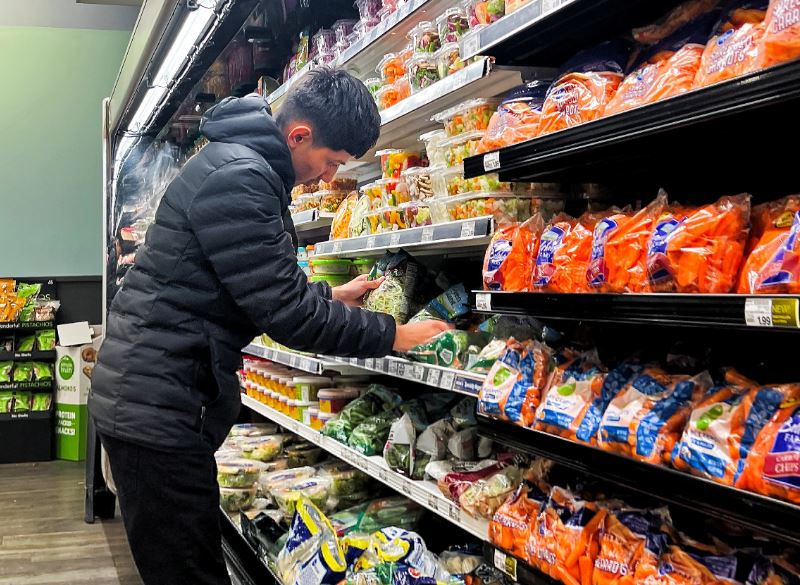
Grocery store inflation shot up 0.7pc, the largest increase since August 2022. Beef prices increased 2.7pc, the most since November 2024. Coffee prices rose 2.0pc. Fruits and vegetable prices climbed 1.8pc. There were also strong increases in the prices of dairy and eggs.
&uuid=(email))