

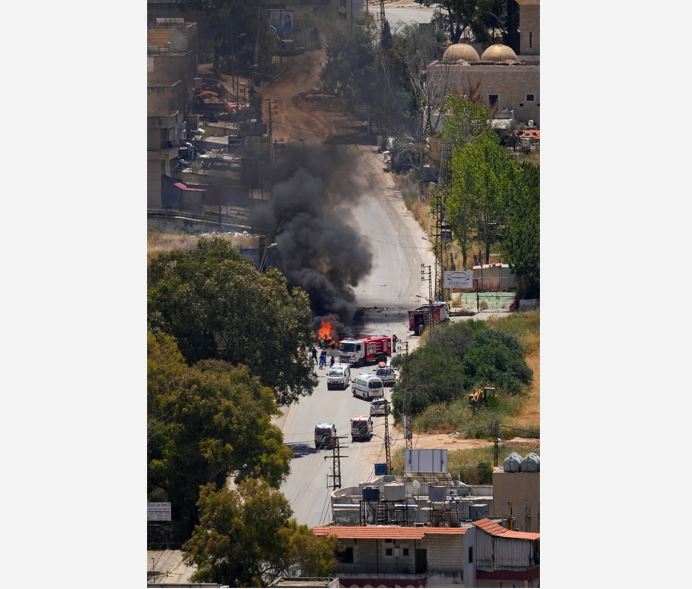
The United Nations Human Rights Council (UNHRC) will examine the humanitarian, legal and security repercussions of Iran’s attacks on Bahrain and several Gulf states during its 62nd session, which will be held in Geneva from June 15 to July 10.
According to the Council’s agenda, obtained by our sister paper Akhbar Al Khaleej, the issue has been included under Resolution 61/1, which requests the UN High Commissioner for Human Rights to present a verbal briefing on the consequences of the attacks targeting Bahrain, other Gulf countries and Jordan.
The briefing is expected to address the impact of the attacks on civilians, as well as their broader implications for regional security and stability. The inclusion of the issue on the Council’s agenda reflects growing international attention to the matter and its continuing consequences.
During the session, the Council will hear an assessment from the High Commissioner on the humanitarian and legal dimensions of the attacks. The international coalition that supported the initiative welcomed the move, describing it as an important step toward highlighting the violations committed and drawing attention to their effect on regional peace and security.
The coalition also stressed the need for the issue to be addressed within the framework of international law and the UN Charter, calling for a clear international stance that protects civilians, respects state sovereignty and ensures accountability for violations.
In March, the Human Rights Council adopted a resolution on the repercussions of the attacks against Gulf states, condemning missile and drone strikes and describing them as a threat to international peace and security and a violation of international law. The resolution reaffirmed the need to protect civilians and civilian infrastructure from attack.
It also called for an end to all attacks and threats, respect for freedom of navigation and the security of maritime routes, and reaffirmed the right of states to self-defence in accordance with the UN Charter. In addition, it urged compensation for victims who suffered losses and damages as a result of the attacks.
• A study published by the Bahrain Centre for Strategic, International and Energy Studies (Derasat) warns that Iran’s pursuit of nuclear weapons poses a growing threat to Gulf security and regional stability, with the potential to alter the balance of power and fuel further tensions across the region.
The study, prepared by Dr Ashraf Mohammed Keshk, Director of the Centre’s International and Strategic Studies Programme, argues that Iran’s pursuit of a nuclear programme with potential military dimensions is the primary factor driving escalating regional threats. It noted that the prospect of a nuclear capability could be used to expand Tehran’s influence and advance broader regional ambitions.
The study examines four main areas: the development of Iran’s nuclear programme; the justifications presented for advancing nuclear energy; the implications of a potential shift toward nuclear armament for Gulf and regional security; and the policies adopted by GCC states to address this challenge.
&uuid=(email))