

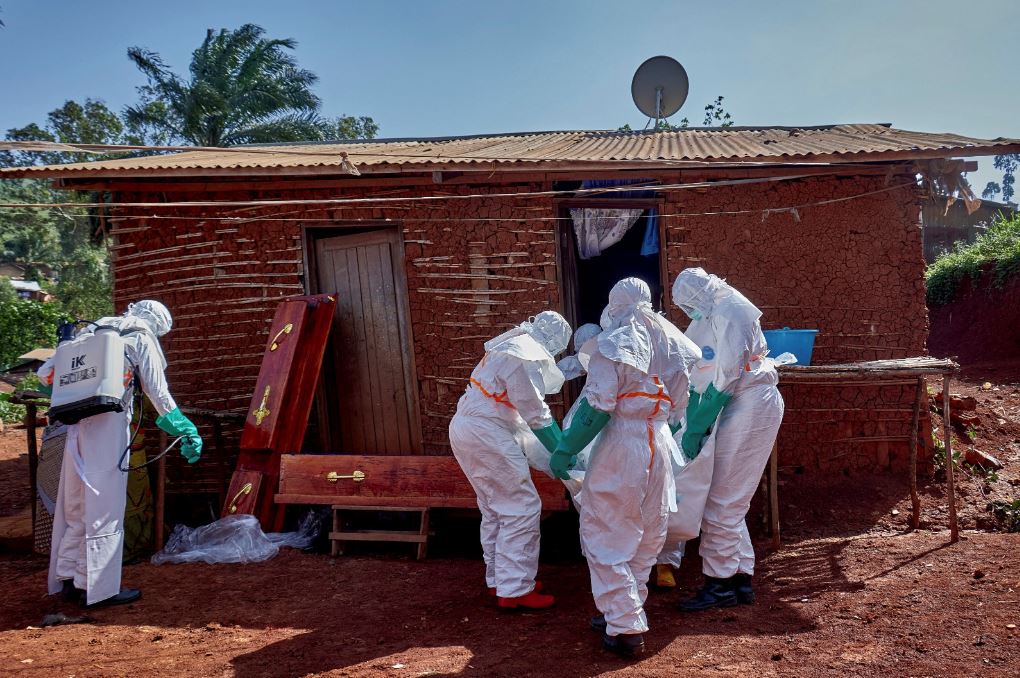
As the Ebola outbreak continues to spread in the Democratic Republic of Congo, specialised burial teams are playing a critical role in preventing further infections. Among them is Red Cross volunteer Safari Isaac, whose Safe and Dignified Burial (SDB) team works on the front lines of the health crisis, handling the bodies of suspected Ebola victims under strict safety procedures.
Before every burial, the team carefully sanitises and prepares a coffin before placing the body inside. They then transport the coffin to a burial site and conduct the burial themselves, minimising the risk of exposure for family members. Health officials say contact with the bodies of Ebola victims remains one of the most dangerous sources of transmission, making the work of burial teams essential to controlling the outbreak.
Isaac says most families understand the importance of the team’s work and cooperate with health officials. However, mistrust and misinformation continue to create challenges in some communities. Burial teams and healthcare workers often face resistance from relatives who question the cause of death or accuse response workers of profiting from the epidemic.
“Most families understand what we are doing because it helps break the chain of contamination,” Isaac said. “But there are still people who do not understand, and they can resist our work in the field.”
Security has become an increasing concern for health workers. In recent weeks, burial teams and other Ebola responders have faced threats and attacks during operations. As a result, police officers and soldiers are frequently deployed to accompany teams and ensure their safety while carrying out burials.
The outbreak has placed significant pressure on Congo’s healthcare system, with response teams working long hours in difficult and often dangerous conditions. Despite the risks, burial workers continue their efforts to protect communities and prevent the virus from spreading further.
According to government data released Friday, the number of confirmed Ebola cases in the Democratic Republic of Congo has risen to 689, including 139 deaths, underscoring the scale of the challenge facing health authorities as they work to contain one of the country’s deadliest outbreaks.
&uuid=(email))