

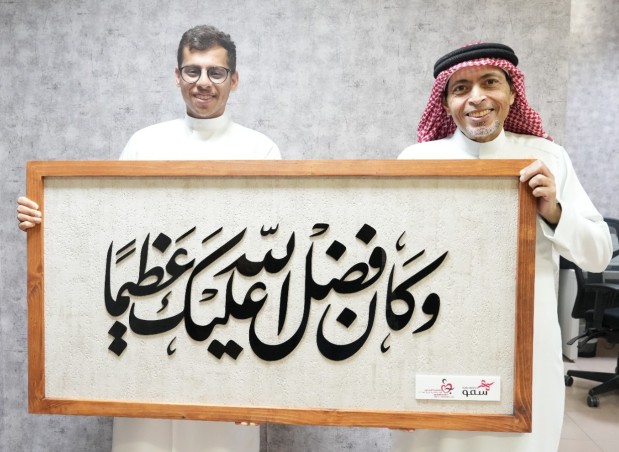
Two young sickle cell heroes, among the first in the kingdom to be cured of the hereditary illness, have been honoured by the Bahrain Society for Sickle Cell Disease (SCD) Patient Care as the country marks World Sickle Cell Day on Friday.
Amjad Al Mahari and Lujain Al Abadi, who underwent breakthrough gene-editing therapy, were recognised for their ‘patience, determination and faith’.
The pair received Casgevy, a CRISPR-based treatment delivered through bone marrow transplantation technology, and have since made a full recovery.
Last year, at age 24, Mr Al Mahari became the first patient outside the US to be administered Casgevy at the Royal Medical Services-Bahrain Oncology Centre.
“This commemoration marks a new stage in the treatment of SCD, characterised by hope, recovery and quality of life,” society chairman Zakariya Al Kadhem stated.
“We are not only honouring Amjad and Lujain’s recovery, but also celebrating two inspiring stories of resilience and faith in the future in the face of a major challenge.
“Amjad and Lujain showed us what true bravery is, and became a source of hope for thousands of patients and their families, within Bahrain and beyond.”
He noted that Bahrain has emerged as a model for other nations in advancing treatment for the condition.
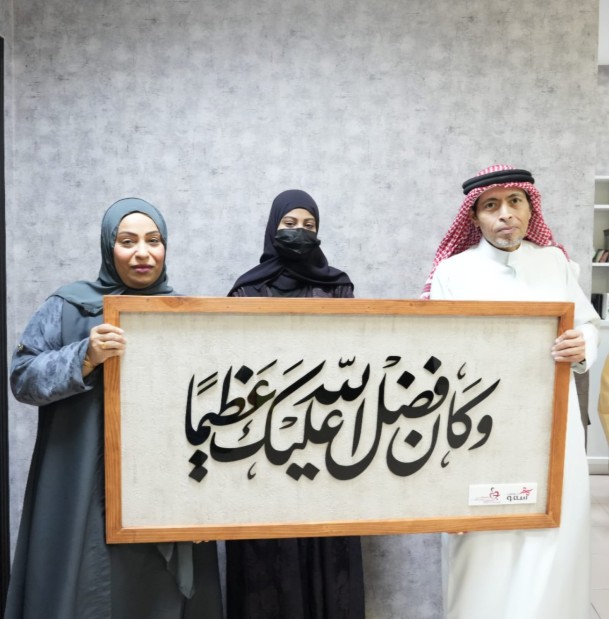
Mr Al Kadhem, right, with ‘hero’ Ms Al Abadi, centre
Mr Al Kadhem thanked His Majesty King Hamad and His Royal Highness Prince Salman bin Hamad Al Khalifa, Crown Prince and Prime Minister, for their continuous support for the healthcare sector, and for their contributions to make cutting-edge treatments like Casgevy available.
He also thanked the efforts of healthcare workers for their crucial role in making this milestone a reality, and for helping ‘increase the odds of patients achieving a life free of suffering’.
“This day is an occasion to renew our vows to continue raising awareness, strengthen partnerships and support national efforts to enable patients to have healthy and productive lives,” he said.
Both Mr Al Mahari and Ms Al Abadi were gifted framed pieces of Arabic calligraphy, with a verse from the Quran that reads ‘And ever great is the grace of God unto you’.
A total of 6,700 SCD patients are currently registered in Bahrain. The life expectancy of SCD patients has increased drastically within the past decade, rising from 42 years in 2014 to 68 years today.
The genetic condition causes red blood cells to become rigid and C-shaped, restricting blood flow throughout the body. Symptoms can vary significantly from person to person depending on genetic factors, environmental conditions and stress tolerance.
While some patients experience mild anaemia and fatigue, others suffer severe and life-threatening complications, including intense pain crises, organ damage and strokes.
In 2008, the United Nations officially designated June 19 as World Sickle Cell Day to recognise the disorder as a major public health issue. In 2023, Bahrain approved glutamine (sold as Endari), a medication used to help treat SCD patients from the age of five.
In the same year, the ground-breaking Casgevy (exagamglogene-autotemcel or ‘exa-cel’) gene therapy was approved as treatment for SCD and transfusion dependent thalassaemia. In the UK, the price of the medication is estimated at £1 million (BD506,000), while in the US it is listed at $2.2m (BD830,00).
The GDN earlier reported that not all sickle cell anaemia patients are eligible, with the treatment most likely to be successful for those aged 20 to 35 who have had two sickle seizures within two years.
For the Bahraini heroes, the treatment time ranged between six to nine months in six stages, beginning with selecting and evaluating patients.
The patients’ bone marrow was then conditioned in preparation for the transplantation, and then they were given medication to stimulate bone marrow production of stem cells. The cells were collected and sent to specialised centres for genetic modification, to be reintroduced into the bloodstream, after which they are to enter full remission from SCD.
Prior to the introduction of the genetically edited stem cells, the patients were administered another medication to eliminate old bone marrow.
zainab@gdnmedia.bh
&uuid=(email))