

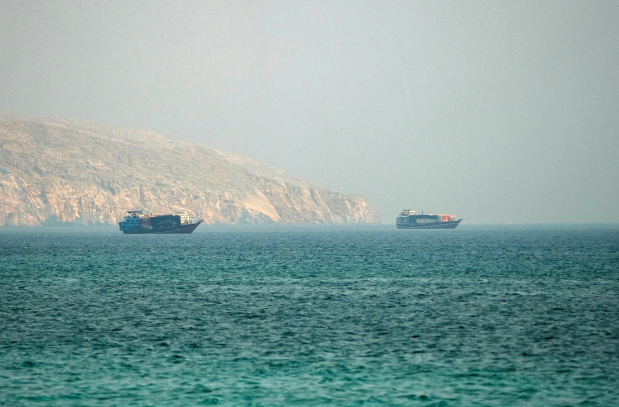
Countries should reject efforts by Iran to impose sovereignty over the Strait of Hormuz and Tehran’s ‘unilateral decision’ to create a body to control traffic through the waterway, the UN shipping agency’s governing council agreed yesterday.
The US and Iran exchanged hostilities this week, including US military air strikes, prompted by attacks on ships that Washington said Tehran carried out.
The attacks renewed concerns about the recovery of global oil supplies and shipping, and highlighted the fragility of an interim truce to end the more than four-month conflict while the US and Iran hammer out a lasting agreement.
The UN’s London-based International Maritime Organisation (IMO) is responsible for regulating the safety and security of international shipping and preventing pollution, and comprises 176 member states.
Protection of vital shipping lanes was discussed at a session this week of its 40-member governing council. Gulf countries, the US and Iran clashed over the future of the Strait.
The IMO Council ‘strongly condemned’ Iran’s decision to ‘establish an entity purporting to control traffic through the strait’, according to the text of a non-binding decision reached.
The council decision called upon member states not to recognise ‘Iran’s claim of sovereignty over the Strait of Hormuz, its assertions of jurisdiction over the maritime zones of third states in and around the Strait, which violated the sovereignty, sovereign rights and exclusive jurisdiction of these states” and not to recognise any Iranian decisions aimed at ‘closing, obstructing, hampering or otherwise interfering with international navigation and the right of transit passage’.
Daily tanker traffic in the Strait of Hormuz appeared to have slowed yesterday.
Oil prices eased but remained on track for weekly gains of 4-5 per cent after the flare-up.
The International Energy Agency said global oil supply rose by 4.1 million bpd in June as shipping through the Strait resumed, but remained 9.4m bpd below pre-war levels.
It warned of tight diesel and petrol supplies, and said refineries were slower to react to the reopening of the Strait than crude prices.
The Strait of Hormuz handled about a fifth of global oil supplies before the war.
Under the interim deal, the US ended its naval blockade of Iranian ports, and Iran agreed to ensure safe passage of commercial vessels.
However, this week Washington accused Iranian forces of attacking three tankers in the area and struck military sites on Iran’s southern coast and eastern provinces in response.
&uuid=(email))