

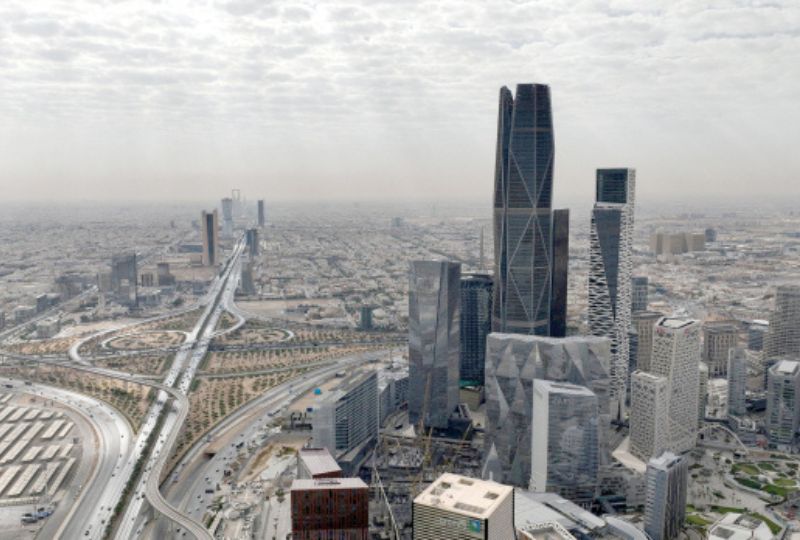
Saudi Arabia posted a budget deficit of 34.3 billion riyals ($9.14bn) in the second quarter of 2026, bringing the kingdom’s first-half shortfall to 160bn riyals, according to the Ministry of Finance, reports the Arab News.
The second quarter deficit narrowed sharply from 125.7bn riyals in the first three months of the year, as government revenues strengthened while spending remained elevated.
Total revenue increased 12 per cent to 338.8bn riyals, while government spending rose 11pc to 373bn riyals in the second quarter compared to the same period of the previous year.
Oil revenues accounted for 185.1bn riyals of total receipts, while non-oil revenues stood at 153.7bn riyals during the quarter.
For the first half, the government financed the entire 160bn riyals deficit through borrowing, with no financing drawn from government reserves.
Borrowing amounted to 125.7bn riyals in the first quarter and 34.3bn riyals in the second quarter.
Government spending on infrastructure and transportation rose 21pc in the first half of 2026 compared with the same period a year earlier, while expenditure on health and social development increased 10pc.
The latest figures come as Saudi Arabia continues to increase spending on major development and diversification projects while managing the impact of oil-market conditions on public finances.
According to the International Monetary Fund’s latest report, the kingdom’s economy is expected to stay resilient amid geopolitical conflicts and is projected to grow by 1.7pc this year before accelerating to 5.5pc in 2027.
The IMF said that while the war in the Middle East and the near halt in shipping through the Strait of Hormuz have disrupted activity, curtailed trade, including oil exports, and dented confidence, the kingdom’s economy is ‘showing agility and resilience, reflecting Saudi Arabia’s strong macroeconomic fundamentals and diversified oil and logistics infrastructure.’
&uuid=(email))