

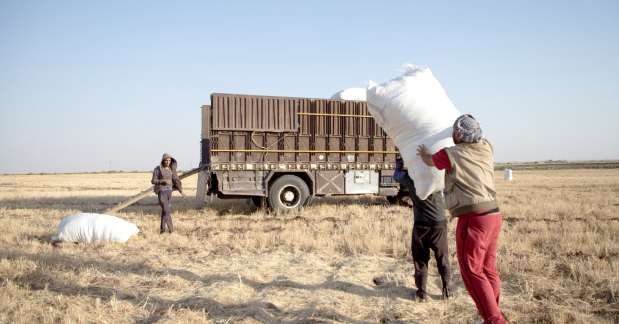
SYRIA’S economic recovery is gaining momentum as reforms advance and confidence improves, the International Monetary Fund (IMF) said, while urging authorities to sustain progress through continued fiscal, banking, and structural reforms, reports the Arab News.
The assessment followed a July 19-23 visit to Damascus by an IMF staff team led by Ron van Rooden, the fund’s mission chief for Syria, to review progress on reforms and discuss priorities for further technical assistance.
Syria’s economic recovery follows more than a decade of conflict, with a World Bank assessment estimating reconstruction needs at $216 billion, including $108bn in direct physical damage to infrastructure, residential buildings and non-residential structures.
The report also found that Syria’s real gross domestic product contracted by nearly 53 per cent between 2010 and 2022, underscoring the scale of the country’s reconstruction and recovery challenge.
Speaking at the conclusion of the IMF mission, Rooden said: “Syria’s economic recovery is accelerating. In 2025, the economy started to recover with improved consumer and investor sentiment following the regime change, the return of about 1.5 million refugees, and Syria’s gradual re-integration with the regional and global economy, which helped offset the dampening effect on growth of a major drought that adversely affected agriculture.”
The IMF expects Syria’s economy to record double-digit growth in 2026 despite continued regional conflict, supported by a recovery in agriculture following improved rainfall, expanding hydrocarbon production, higher electricity supply, and continued growth in trade and services.
Rooden said economic activity is also being supported by the return of refugees, increased visitor arrivals, and government policies aimed at restoring macroeconomic stability and encouraging a private-sector-led recovery.
However, he cautioned that the recovery remains uneven across regions and that poverty, despite some improvement, remains widespread.
The IMF mission chief also highlighted inflation risks, saying price pressures have accelerated this year due to higher fuel and food import costs linked to regional conflict, stronger domestic demand, higher utility prices, and rising housing costs.
Inflation had slowed to low double digits in 2025, Rooden said, adding that “inflation is expected to slow in 2027, provided import price pressures ease and sound fiscal and monetary policies are pursued.”
Rooden said Syria’s fiscal position has improved, with the central government recording a small budget surplus in 2025 after aligning spending with available resources and prioritising essential needs.
Government revenues are expected to rise substantially this year, supported by stronger tax and customs collections, higher hydrocarbon revenues, and one-off income from telecom licences and fuel transit fees.
He stressed the need to maintain prudent fiscal policies, improve public financial management, strengthen tax and customs administration, limit tax exemptions, and better prioritise spending to create room for development projects and social protection.
“The authorities are also rightly focusing on further improving revenue mobilisation, through tax reform and strengthening tax and customs administration, while tax exemptions should be limited,” he said.
&uuid=(email))