

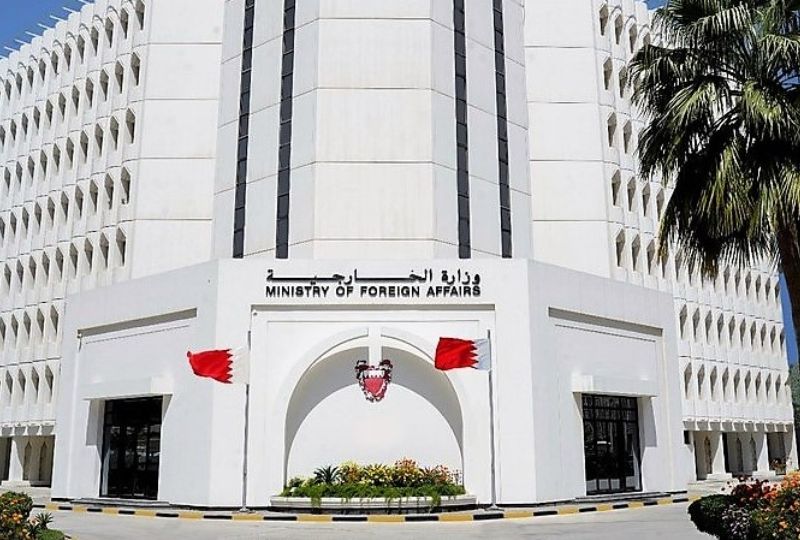
Bahrain has said that it will not attend any meeting with Iran to discuss the Strait of Hormuz until diplomatic ties between the two countries are restored.
Tehran announced yesterday that it was planning to attend a meeting with Gulf countries in Oman tomorrow. Oman has not officially announced the meeting and other regional states have so far remained silent.
In a statement, Bahrain’s Foreign Ministry said its position had previously been communicated to Oman through official channels and does not diminish the kingdom’s appreciation for its sincere efforts, nor its commitment to dialogue as a means of resolving disputes.
The ministry said dialogue cannot be built on disregarding facts.
“The kingdom has been subjected to attacks targeting its infrastructure and civilian assets, one of which, targeting an ammonia tank, nearly led to a full scale catastrophe,” the ministry said.
The targeting of the East-West oil pipeline in Saudi Arabia confirms that the targeting of civilian and economic facilities remains a present danger, not a matter of the past, it pointed out.
The ministry stressed that the security and stability of the region cannot be built on turning a blind eye to attacks, cannot be purchased through silence over their consequences, and cannot be preserved through a policy of appeasement.
“Bahrain, while upholding good neighbourliness as a legal obligation rather than a political courtesy, believes that peace rests on four indispensable pillars: an end to attacks, the establishment of international responsibility for them and redress for the resulting damage, respect for the sovereignty of states and that no state’s territory be used as a launching point for aggression against its neighbours, and the settlement of outstanding issues through legal means.”
The ministry reiterated the kingdom’s firm position that any arrangement concerning navigation in the Strait of Hormuz must be based on the 1982 United Nations Convention on the Law of the Sea and must be adopted by the International Maritime Organisation.
It must also preserve the right of transit passage for all vessels without discrimination, fees or permits, and must involve the contribution of all GCC states, given that the security of the passage is tied to the security of their supplies, the statement added.
The kingdom, by virtue of its membership in the United Nations Security Council and its commitment to joint Gulf action, will continue to work through legal and diplomatic channels to safeguard freedom of navigation and regional security, the ministry said.
Bahrain will stand ready to support any arrangement that enjoys consensus and is grounded in law.
“The kingdom does not close the door to peace, but it will not open it at the expense of what is right; for peace not built on justice is merely a truce awaiting its expiration,” the statement pointed out.
&uuid=(email))