

Engagement and satisfaction levels of UAE workers are significantly above global averages, with 20 per cent of the workers being highly engaged and highly satisfied, according to a new report.
High workplace satisfaction positively correlates with high employee engagement and employees who have greater control over their work experiences are some of the most highly engaged in the world, added the report entitled “Engagement and the Global Workplace” from Steelcase, a top provider of architecture, furniture and technology products.
According to the study, one-third of workers in 17 of the world’s most important economies are disengaged. Steelcase set out to understand if the physical workplace could be used as a strategic asset to help improve employee engagement and what changes could make the largest impact.
The report found diverse workplace experiences throughout the world and identified the factors impacting engagement, including the cultural context in which employees work.
“As we analyzed this data, it was interesting to us how consistently the most engaged workers were those who had more control over their work experience, including the ability to concentrate easily and work in teams without being interrupted,” said Christine Congdon, director of Research Communications, Steelcase.
“Workers who have the ability to choose where they wish to work in the office based on the task they have to do are much more engaged in the work they do.”
Other key findings from the global report include:
• Employee engagement positively correlates with workplace satisfaction. The data shows that workers who are highly satisfied with various aspects of their workplace also demonstrate higher levels of engagement. Yet, only 13 per cent of global workers are highly engaged and highly satisfied with their workplace. The inverse is true as well: 11 per cent of employees are highly dissatisfied with their offices and are also highly disengaged. Ranking third in the study, engagement and satisfaction levels of UAE workers are significantly above global averages, with 20 per cent of the workers being highly engaged and highly satisfied, and only five per cent being highly disengaged and highly dissatisfied.
• Engaged employees have more control over their experiences at work. A distinguishing characteristic of engaged employees is that they have a greater degree of control over where and how they work, including access to privacy when they need it. They are empowered, both by organizational decisions and the spaces made available to them within their workplace, to make choices about where and how they work. This means they can manage their need for privacy so they can concentrate easily and work with teams without disruptions.
Though scoring high on engagement and satisfaction levels, UAE workers report below average satisfaction levels on workspace size, office furniture, and ambient noise level, and below average access to shared spaces such as meeting rooms and social hubs.
• Fixed technology exceeds mobile by 2:1. Despite the high global adoption of mobile devices for personal use, the vast majority of study participants report that their organizations provide twice as much fixed technology versus mobile options for work. The vast majority of workers report that they are equipped with land-line telephones (86 per cent) and desktop computers (80 per cent). Far fewer employees have laptops (39 per cent), mobile phones (40 per cent) or tablet computers (13 per cent) available to them at work.
In the UAE, the prevalence of mobile phones (34 per cent) and laptops (29 per cent) lags global averages, but tablet use (22 per cent) is high.
• Traditional work styles persist. Across the globe, the most common workplace design features a combination of open spaces and private offices, but more than three quarters of global employees say they work in either individual or shared private offices. The greatest contrast in open environments and private or shared offices can be seen in Europe, particularly in the UK, where nearly half (49 per cent) of all office layouts are entirely open, and Germany, where 54 per cent of overall physical workplaces consist entirely of individual or shared private offices.
Offices in the UAE are primarily traditional. The majority of the employees work either in a private or a shared private office (52 per cent) compared to the global norm of 37 per cent for shared private office space. Entirely open-plan offices are also relatively uncommon – 11 per cent, compared to the global average of 23 per cent.
• Cultural context influences engagement levels. The most highly engaged employees hail from emerging economies, where people have different expectations of their work environments than those in established economies. Workers from developing countries such as India and Mexico are some of the most highly satisfied and engaged, while people in France, Belgium and Spain are less engaged. Analysis of the data identified a pattern indicating that the country where employees live, its culture and the resulting expectations have an impact on how highly engaged and satisfied they are with their workplace.
UAE data reports high engagement and satisfaction rates, but also exposes contrasts, an observation that can partially be attributed to the fact that the UAE, one of the leading emerging markets, is home to over 200 nationalities.
“For organizations on the path toward global integration, it’s important to challenge assumptions and look broadly at the diverse factors that influence employee engagement,” continued Congdon. “Well-designed workplaces can communicate a company’s strategy, brand and culture and encourage the employee behaviours leaders want in their organization – all fostering higher engagement levels.”
“With the UAE government encouraging investment in human capital to achieve sustainable growth in the post oil economy, the study provides some key takeaways for leaders looking to maximize the potential of their employees,” said Andy Morris, Head of Sales, Middle East, Steelcase.
“By addressing the most basic needs of individuals – physical, cognitive and emotional – leaders can show that they care about their employees’ wellbeing, and increase profitability, productivity and employee retention in the process.” – TradeArabia News Service
UAE tops global averages for worker engagement
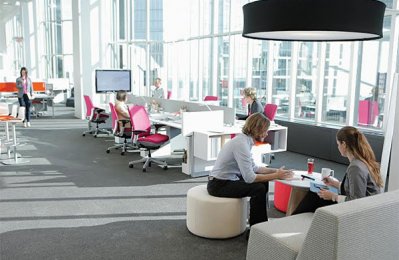
Increased choice and control over work experience<br>ties to higher employee engagement.
&uuid=(email))