

ADULT obesity rates in Bahrain are increasing with more than 70 per cent of the country’s population aged above 18 categorised as obese, according to an expert.
Though the full results of the 2018 National Health Survey are still awaited, nothing much has changed from the statistics of 2007 – the latest Health Ministry figures available, according to public health consultant Dr Kawther Aleid.
The expert has been spearheading a voluntary community campaign since 2017 to raise awareness about obesity and the importance of a healthy lifestyle.
“The official figures of 2007 show that the percentage of weight gain and obesity together in people above 18 years of age in Bahrain has exceeded 70pc,” said Dr Aleid.
“The results of the 2018 survey are awaited, but the rates (obesity and weight gain) are increasing.
“The threat of diseases from these risk factors is obvious,” noted the physician, who is also the president of Health Mates Society.
She also pointed out that according to the 2018 survey results available, 18pc of people aged above 20 had diabetes, compared with 14.8pc in 2007.
Her campaign, titled ‘Obesity Doesn’t Suit Me’, is being run in co-operation with the Northern Governorate.
“The campaign is in line with efforts to combat obesity in Bahrain, especially with the steady increase in the number of people affected by it, and the threat of diseases and their complications,” she explained.
“The increase in the percentage of obesity and overweight is a result of lack of awareness and practising healthy lifestyles.
“The campaign aims to promote physical activity and healthy food which are important to combat obesity and reduce non-communicable diseases.”
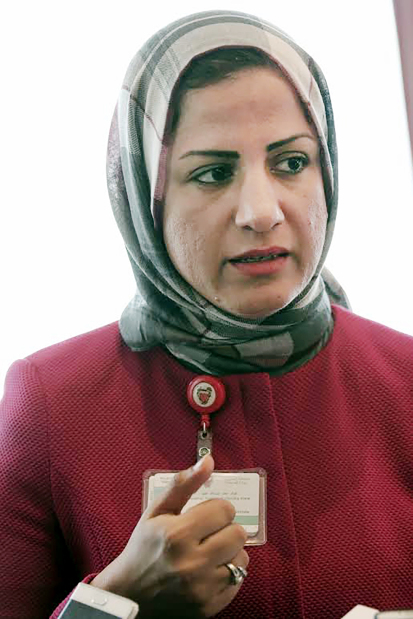
Dr Aleid
Dr Aleid was speaking at a dialogue about her campaign at the second edition of Bahrain Diabetes and Endocrinology Review Conference in Manama, where experts observed that diabetes had become an epidemic and had the highest rates of infection in the GCC.
In the Gulf, Kuwait has the highest rate of obesity, with 36pc among males and 48pc among females, followed by the UAE with 25pc (males) and 42pc (females).
In Bahrain, the obesity rates are 20pc (males) and 38pc (females).
“The continuing high incidence of diabetes in Bahrain has reached 15pc per year, and this calls for intensified efforts for the prevention and awareness campaigns to reduce the significant rise in infection rates,” said Salmaniya Medical Complex (SMC) Endocrinology and Diabetes department head Dr Hussain Taha.
“We need to employ technological treatment on a larger scale in all health sectors.
“Diabetes in its modern concept is a non-communicable pandemic as a result of the significant rise in patients.
“Death rate from diabetes and its complications in 2007 was one death every 10 seconds.
“Sixty per cent of deaths are a result of complications affecting the cardiovascular system and the Gulf states fall within the first 10 countries in the incidence of diabetes.”
The GDN reported last month that studies show 50pc of Bahrain’s population aged under 20 was overweight, and 40pc obese.
Consultant family physician and diabetologist Dr Amal Al Ghanem warned that failing to curb the trend would result in a future generation that would be a medical burden to society.
It was also reported that Bahrain spends 15pc of its healthcare budget on medicines for diabetes.
raji@gdn.com.bh
&uuid=(email))