

TOUGHER punishments for civil aviation violations, including the death penalty in case of fatalities, are set to be introduced in Bahrain under new legislations that MPs will vote on urgently during Parliament’s weekly session on Tuesday.
The government-drafted amendments have been referred urgently to the National Assembly as International Civil Aviation Organisation officials are set to review Bahrain’s civil aviation safety procedures.
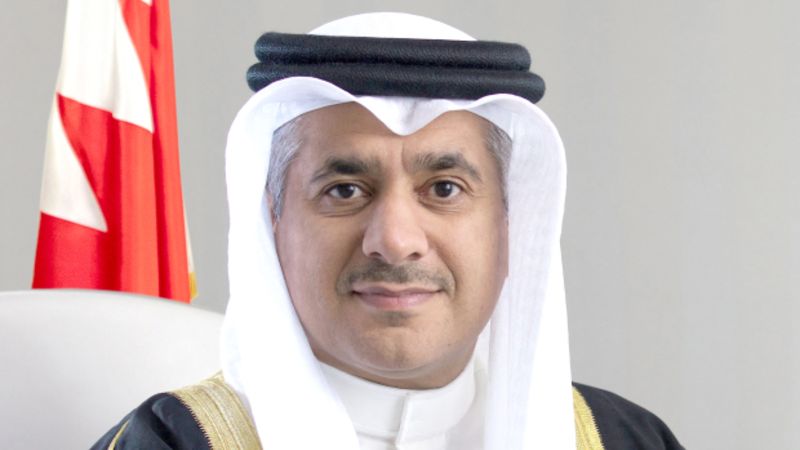
Transportation and Telecommunications Minister Kamal Ahmed told Parliament’s public utilities and environment affairs committee that amendments to the 2013 Civil Aviation Law were necessary.
Under the amendments, the fine for destruction on an aircraft or at airport facilities is between BD3,000 and BD100,000, life in jail for severe security offences and the death penalty should there be fatalities.
Trained air marshals have to be present on all flights, with a new independent investigation unit being set up for accidents and dangerous incidents during flights.
An inspections taskforce with judicial powers would also be formed to monitor rates for air travel and cargo, inspect offices of those working in the sector, and enter airport facilities and aircraft.
Civil Aviation Affairs would have the power to terminate contracts, ban or ground specific aircraft.
It would also have the power to ban any aircraft from flying over the country’s airspace permanently or temporarily.
Offices failing to implement aviation rules could be closed and licences of authorised personnel revoked.
Such offences could be fined up to BD10,000 unless they contravene other legislations that are higher.
Those who use laser beams or computer programmes to cause disruption in an aircraft will face criminal action.
A new national committee for civil aviation is set to be formed with concerned government parties, airport companies, airliners, travel agents, and other representatives from the sector as members.
Meanwhile, MPs are set to debate amendments to the 2002 National Budget Law that would force the government to outline spending concepts according to social needs through particular categories for women, men, youth, people with disabilities, and the elderly.
The Finance and National Economy Ministry pointed out the amendments should not be in general terms but aimed at specific programmes.
The proposed amendments have been backed by the Supreme Council for Women.
Parliament will also vote on amendments to the 2006 Insurance Against Unemployment Law that would force the government to train jobseekers in civil service with a view to employing them, and provide valid reasons if found not up to the mark.
The Labour and Social Development Ministry has asked MPs to rethink the amendments, saying it would cause confusion to employment efforts, while the Transportation and Telecommunications Ministry backed it.
MPs are also set to debate a Parliament-proposed legislation that would force clubs to turn into investment companies despite a rethink call from the Youth and Sports Affairs Ministry.
Parliament will also vote on a royal decree issued by His Majesty King Hamad during the National Assembly’s recess last year to amend the 2018 Bankruptcy Law.
In response to a question by services committee vice-chairwoman Dr Sawsan Kamal, Health Minister Faeqa Al Saleh said around BD49.5 million was spent on medicines last year, with BD3.2m directed to psychiatric medications.
Education Minister Dr Majid Al Nuaimi said, in response to another question, that 137 Bahrain Training Institute employees have been found jobs under the new employment structure while the others who were not would be moved to the ministry.
“Ten employees don’t fulfil the employment criteria and we are working with the Civil Service Bureau to resolve that.”
Housing Minister Bassem Al Hamer will also appear in Parliament to respond to two questions on housing projects in the Northern Governorate constituency five and Capital Governorate constituency four.
mohammed@gdn.com.bh
&uuid=(email))