

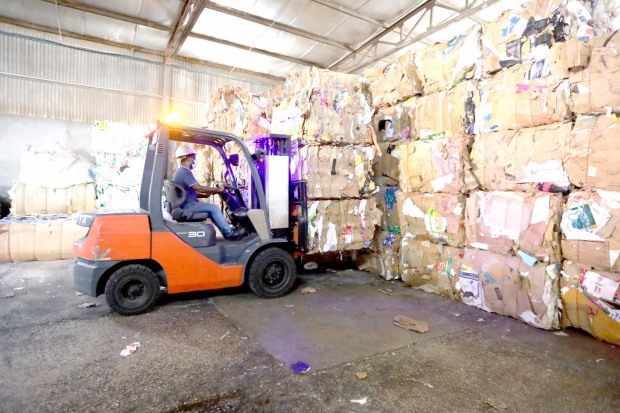
MANAMA: Al Majid Recycling Factory is seeking government support in the form of subsidised funding or access to industrial land, as it seeks to reduce the amount of plastic ending up in landfills.
According to the founder and chief executive Hameed Al Majid, the most successful recycling initiatives globally are based on integrated public-private partnerships.
“We find that the public sector is responsible for providing appropriate support in the form of subsidised funding or access to industrial land. In order to effectively address Bahrain’s recycling needs, the industry requires similar aid,” he asserted.
Established in 1985, the factory was the first in the country to introduce paper processing and recycling and the second in the GCC. In 2012, Al Majid expanded into end-to-end plastic processing and recycling. Today the company which provides tailor-made recycling solutions to government entities, financial institutions, schools, and universities.
Having recycled around 21,800 tonnes of paper, plastic, and solid materials during the first eight months of 2021, at an average rate of 2,000 and 600 tonnes per month of paper and plastic, respectively, the company is aiming to process more than 30,000 tonnes of waste by the end of the year.

Mr Al Majid
It currently recycles 14 types of paper including cardboard and printing paper as well as seven types of plastic, including water bottles, industrial storage barrels, and styrofoam.
Mr Al Majid said: “For the past 28 years, our factory has played an integral role in protecting the environment of Bahrain by processing and recycling various types of waste that would otherwise end up in a landfill.
“It is estimated that around 4 billion plastic bottles are consumed in the country annually, most of which are disposed of in the Askar landfill. It takes around 450 years for a plastic bottle to fully decompose. During that time, a decomposing bottle gradually releases harmful toxic chemicals that pollutes the kingdom’s soil and groundwater, ultimately affecting people’s health. Alongside plastic bottles, tonnes of industrial barrels are similarly discarded which further exacerbates environmental damage.
“In 2020, a record of more than 600,000 tonnes of municipal waste was dumped in the Askar landfill, with figures expected to increase even further in the coming years.”
The official said the environmental significance of the factory’s operations is deepened by the fact that 26 local enterprises depend on it for recycled material as a substitute for expensive raw materials, which in turn preserves valuable natural resources.
avinash@gdn.com.bh
&uuid=(email))