

A NEW historical book catalogues the kingdom’s oldest landmarks, iconic buildings and rare documents.
The two-volume ‘History of Things’ is authored by Bahraini Dr Nader Kadhim and contains original black and white photographs, maps and documents dating back to the 18th century.
It also features important individuals and more than 12 landmarks detailing their origin and construction update backed by historical documents.
These include the history and rare photographs of Bab Al Bahrain, the old Christian cemetery in Manama, the first public clock in Bahrain (1911), the Bible Bookshop later known as Public Bookshop in 1967 and then Family Bookshop, and the expansion of the Shaikh Hamad Bridge between Manama and Muharraq.
“This is the first-of-its-kind book in two volumes that relies on original documents and photographs to explain the iconic landmarks, buildings and important people in Bahrain,” Dr Kadhim told the GDN.
“For example, there is a section on the origin and construction of Bab Al Bahrain designed by Sir Charles Belgrave in 1949 and the Bible Bookshop built in the 1893 in Manama.”
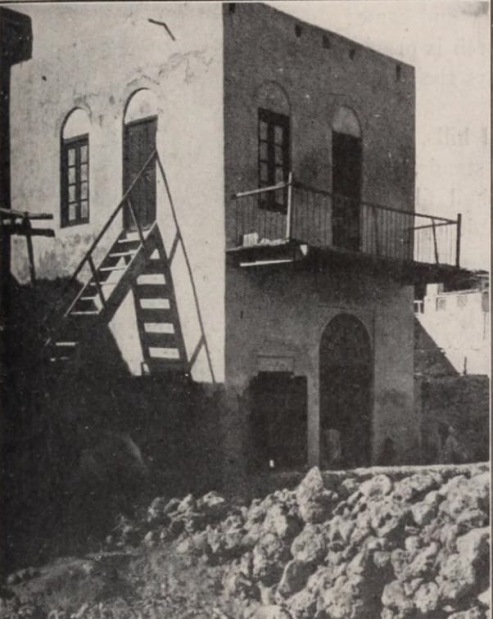
The Bible Bookshop in 1912 that was built near the present Shri Krishna temple in Manama
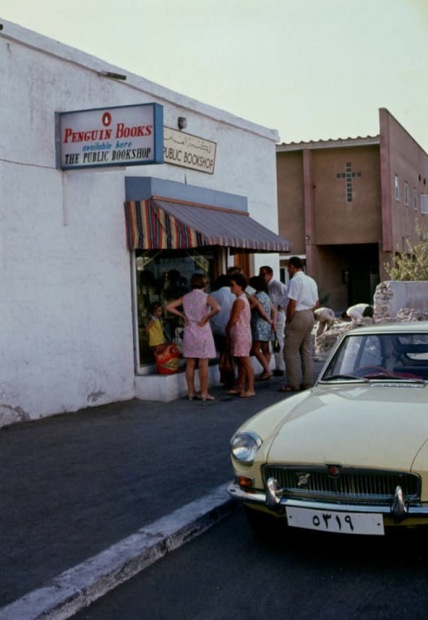
Visitors gather at the Public Bookshop(formerly known as the Bible Bookshop) in 1969
Landmarks
He said he researched documents and photographs to explain the different landmarks, buildings or key persons in the book that is in Arabic.
The author said he was inspired by French historian Fernand Braudel, who in the 1940s presented three concepts to understand history: Geographical time, socio-economic history and ‘history of events’ – which relates to individuals and the course of rapidly changing political events.
“The book covers these three concepts as it documents in detail landmarks, schools, libraries, public clock, tombs, bridges and a treasure trove of archival materials to reflect Bahrain’s history.
“For example, not many are aware about the Anglican church tower clock in 1911 (near the present American Mission Hospital) following which Bahrain shifted from the Arab clock (sunrise to sunset) to the current time.”
Another hidden gem documented in the book is the wooden chair of Viceroy of India Lord Curzon who visited Bahrain in 1903 and highlighted the need to reform Customs.
“This is a historical Lord Curzon chair that is still present at the British Ambassador’s residence in Ras Ruman,” added Dr Kadhim.
“The book features in detail the old Christian cemetery in Manama in 1901, which is also where the grave of Dr Marion Well Thoms, the first female medical doctor in Bahrain, is present.”
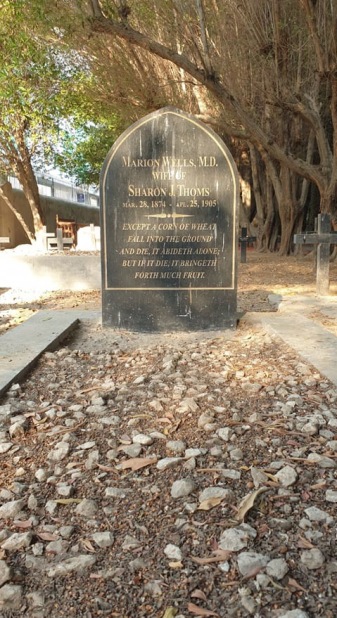
Dr Thoms’ grave at the old cemetery in Manama
The doctor worked at the Mason Memorial Hospital, now known as American Mission Hospital.
Dr Kadhim said the cemetery also has graves of some unknown victims of the British cargo vessel Seistan that exploded in Sitra in 1958 killing more than 50 people.
In addition, this is the first time a Bahraini author has addressed an interesting historical issue related to the spelling of the country, with many countries still mentioning ‘Bahrein’ in international events or statements.
“This is a very interesting issue that is not discussed as many European countries still spell Bahrain as ‘Bahrein’.
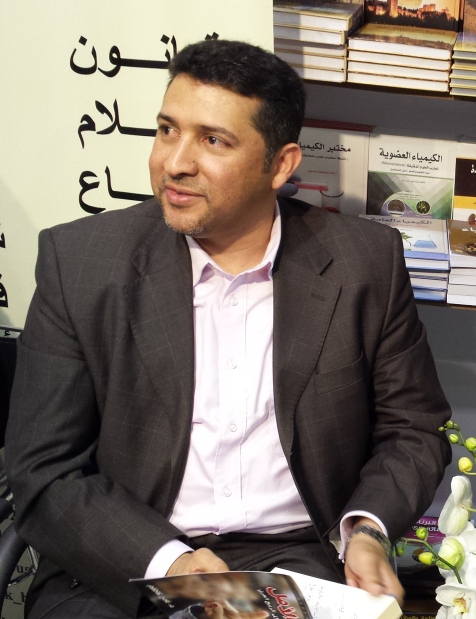
Dr Kadhim
“There is an actual letter from the Navy Secretary in London dated August 17, 1938, in which he says the correct and accepted spelling is Bahrain and not Bahrein.”
Dr Kadhim is sociology professor at Bahrain University and has written several Arabic books and earlier this year released the English version of the book ‘Manama: The City That Never Sleeps’.
It documents the evolution of Manama from a small village to a trading port and now a thriving cosmopolitan capital.
sandy@gdn.com.bh
&uuid=(email))