

Two never-before-seen types of burial mounds are set to be further explored by a Japanese excavation team in Wadi Al Sail during the upcoming excavation season.
Mounds with attached subsidiary burial spots are the focus of ongoing excavation work in the area, Dr Masashi Abe, head of the team, revealed during the final lecture in an archaeology series organised by the Bahraini Authority for Culture and Antiquities (Baca).
“Our studies show that nearly 20 per cent of Dilmun burial mounds in Bahrain have one or more subsidiary burials,” Dr Abe said during a virtual lecture.
“The most common type is one with attached subsidiary mounds. While the bigger mound usually houses an adult body, the attached subsidiary ones have a much smaller body, likely that of a young child or infant. We call this Type 1.
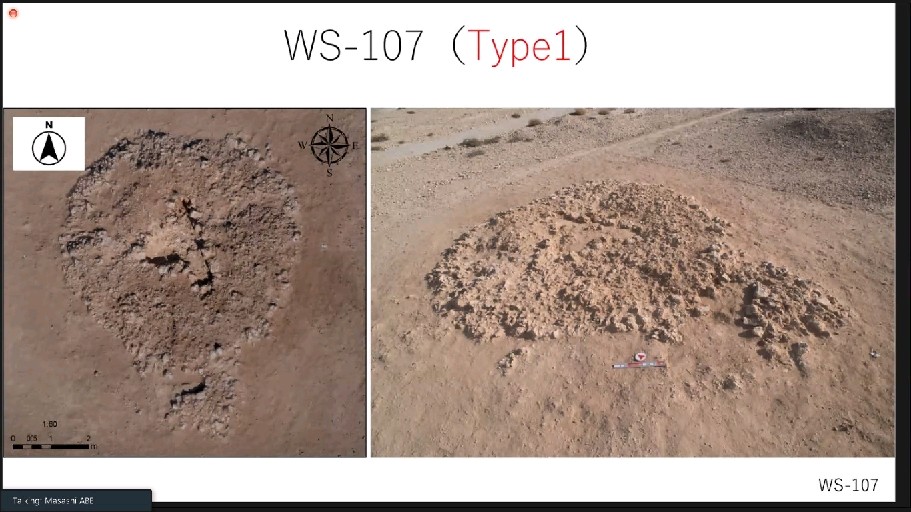
A Type 1 burial mound
“We have also unearthed mounds with small subsidiary mounds near them, which are not attached to the main mound. This is Type 2. And Type 3 mounds have both attached and nearby small mounds. We are not sure exactly what the difference between them is, and we hope our research can help us better understand the burial customs of the Dilmun civilisation.”
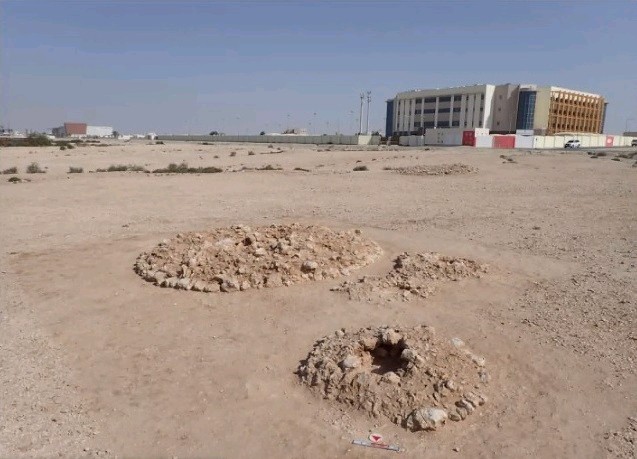
A Type 2 burial mound
Dr Abe estimates that 75,000 burial mounds were constructed during the Dilmun period, spanning from 2300 BC to 1700 BC.
There are two broad kinds of mounds found – the Riffa kind which are low-density cairns, while the Barbar-style ones are highly dense earthen mounds.
The Riffa mounds were constructed between 2300 BC and 2050 BC, while the Barbar mounds date back to 2050 BC to 1700 BC.
“In Dilmun, usually one person was buried in one chamber in a crouching position facing north,” Dr Abe added.
“For the burials with subsidiary mounds, we suspect that the additional burials are those of children of the deceased adult, who died in infancy and childhood.
“The difference between type one, type two and type three is probably related to the age of the buried sub-adult. Type 1 and Type 2 subsidiary mounds probably contain children aged zero to six years old, while six to 12-year-old children were buried in the Type 3 subsidiary mounds.”
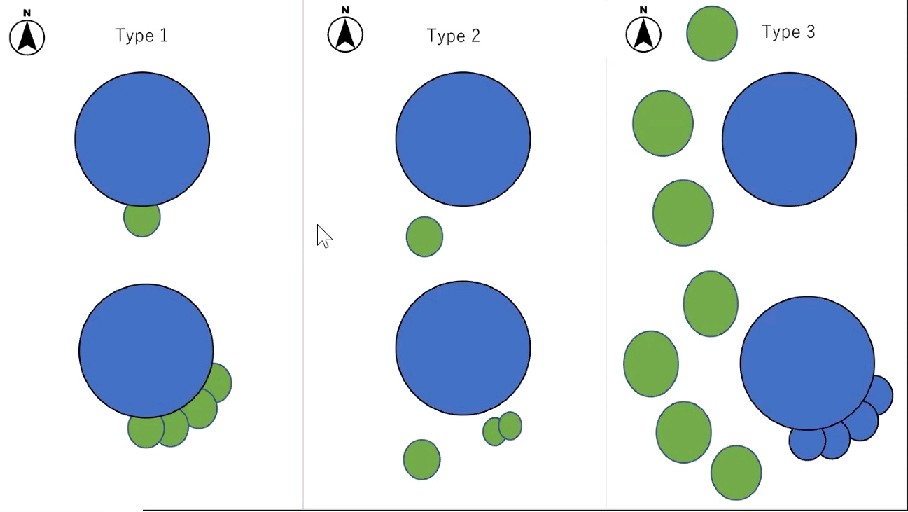
The three types of burial mounds with subsidiary chambers
The adults, buried in the bigger mound – usually about 1.4-to-two metres in diameter, are likely the parent of the children in the subsidiary mounds, but the team has yet to confirm that.
The team has also compared the grave goods – personal possessions and ceremonial items buried alongside the deceased – for primary and subsidiary graves.
“We found that both primary and secondary graves contain pottery, some green pigment for cosmetic purposes, as well as precious gems from across the region. But there is one big difference. We found animal bone – specifically sheep or goat bones – in just the adult burials.
“Our theory is that when an adult passed, there was usually a feast at the funeral, but this was not the case when a child was buried.”
In the first phase of the Wadi Al Sail Archaeological Project between 2015 and 2019, Takeshi Gotoh, Dr Abe’s predecessor, conducted research to discover the origins of the Dilmun civilisation in Bahrain.
In the second phase from 2020 to 2024, Dr Abe is delving into the tribal society of the time and their customs.
Dr Abe’s lecture concluded a series of six Baca lectures, which provided updates on what the various archaeological teams have discovered thus far.
naman@gulfweekly.com
&uuid=(email))