

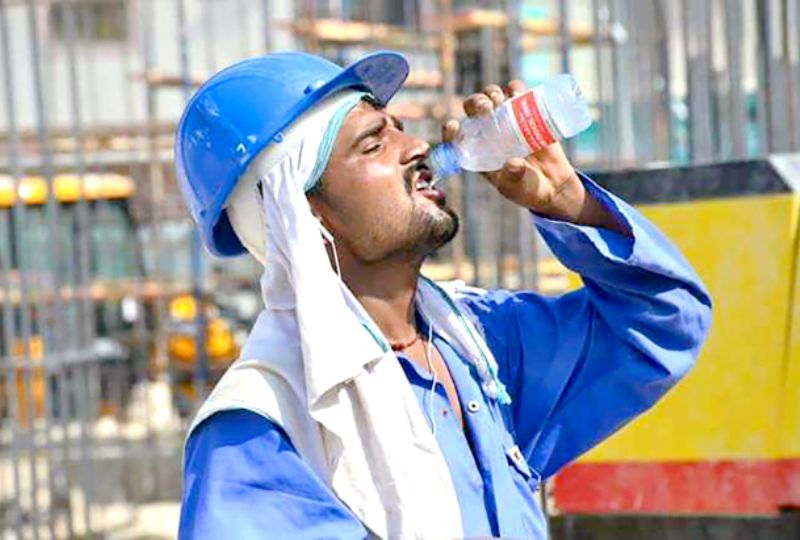
AWARENESS campaigns have been stepped up at construction sites and workplaces ahead of the annual two-month midday summer work ban which comes into effect on July 1.
The clamp, from noon to 4pm until August 31, aims to prevent heat-related illnesses among labourers during the scorching summer months.
The practice has been in force since 2013 following an edict issued by Labour Minister Jameel Humaidan.
There has been a 98 per cent compliance rate for the past five years, reaffirming the ban’s importance in reducing work injuries and summer illnesses, he said yesterday.
He also reiterated Bahrain’s keenness to optimally implement the decision in compliance with human rights principles for a healthy work environment in accordance with international labour standards.
“It is critical for establishments to strengthen their efforts at educating workers about summer diseases and ways to prevent them,” said Mr Humaidan in a statement.
“It is also important to indicate the risks resulting from heat stress due to exposure to direct sunlight during this period in addition to providing comprehensive healthcare and first aid.
“The Labour Ministry has started implementing a proactive campaign aimed at raising awareness among employers and workers to highlight the importance of adhering to this decision.”
The minister underlined the importance of finding appropriate technical solutions that will reduce workers’ exposure to high temperatures and severe humidity.
He added that the successful implementation of the ban over the years has reduced the risks of work injuries while also ensuring it doesn’t impact productivity and work-flow of existing projects.
Mr Humaidan praised the commitment of private sector companies to the edict, as he also welcomed the decision of some establishments to voluntarily extend the implementation period.
He said the voluntary extension has led to an increase in institutional loyalty and production efficiency.
“As part of efforts to raise awareness among employers and employees, the ministry has provided guidance brochures and fliers printed in multiple languages.
“The brochures include instructions and information on the impact of continuous exposure to high temperatures on the health and safety of workers during the performance of their duties.
“Workshops were also held for occupational safety supervisors in private sector establishments to inform them of the latest developments and requirements of conditions necessary to prevent summer diseases and accidents at worksites.”
The ministry will not tolerate violations, warned Mr Humaidan.
Regular and surprise inspections will be conducted with legal action vowed against violators.
The GDN reported last year that 3,334 sites were inspected compared to 4,234 in 2020 which was a 200 per cent rise over 1,465 inspections in 2019.
Employers who break the ban could face up to three months in jail, or fines of between BD500 and BD1,000, or both.
Last year, the GDN reported that unionists had submitted a proposal to extend the ban in Bahrain to three months.
The Bahrain Free Labour Unions Federation (Al Hurr) and the General Federation of Bahrain Trade Unions handed their request to the ministry.
Bahrain is the only GCC country to have a two-month ban while all others impose a three-month ban.
reem@gdnmedia.bh
&uuid=(email))