

LET me begin with the assertion that it is proper and necessary to give priority to the nationals of a country when it comes to employment. In Bahrain, human resources are our biggest wealth and Bahrainis have a tradition of formal education and more recently, the kingdom has been working to make higher education more receptive to the changing needs of the modern workplace, shifting course emphasis and reshaping the structure of education delivery. There are many incentives to encourage Bahrainisation too.
The thing is, even before the pandemic the global workplace was getting more inter-connected, thanks to increased use of technology. The internet meant that companies could engage workforces halfway around the world at salary levels and with perks that suited both the employee and the employer. It also brought diversity and new ideas to the office space – so much so that companies boast of their international workforce. Balancing nationalisation and diversity has always been tricky and the GCC has walked this tightrope pretty well.
We have had a few sticky situations in our track record of course. Remember the late ‘nineties when labour inspectors actually chased workers who had irregular work papers down the kerb near Central Market? And, hawkers who are arbitrarily asked to show their CPR even in more recent times? You may say that this is a sure way to target offenders and well within the law. A variation of this takes place in almost all countries and besides the question of national workforce, it also ensures that workers are in a position to get their rights endorsed and respected – for full pay, medical and other benefits etc.
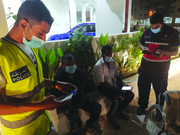
But what often happens is that in the process of threading our way through this complex issue, we end up ‘othering’ some people. A recent news item caught my eye last week which highlighted the joint efforts of immigration and labour authorities in Bahrain to apprehend workers without proper papers. There were many red flags in this news item, mainly in the accompanying photos: firstly, it showed the officers carrying out what looks like spot checks of CPR or other identification in a public area by a roadside. Does this mean we can all be stopped arbitrarily as we step out and asked to show our CPR? Secondly, the photos showed four officials checking each document. Now, as a law-abiding resident, I would find being ‘questioned’ by not one but four official-looking men in a public space intimidating and also embarrassing.
Thirdly – and this was the most disturbing – both the photos which I think were released by the official PR machinery, showed the officials checking documents of residents who were clearly of African origin. Does this hint at any racial profiling, however subtle or unconscious? Will people of colour be subject to more rigorous screening than Europeans and Caucasians?
Bahrain has a great reputation for inclusivity and there is no doubt that from the Royal Family to government to the person on the street, there is a welcoming feel for every expat and for new ideas. However, to preserve that unique culture of harmony, we have to be on guard against any creeping prejudices sullying our perspective. Official channels must exercise double caution to avoid any hint of bias so that our wonderful Bahrain stays forever blessed.
meeraresponse@gmail.com
&uuid=(email))