

A move to tax expatriate remittances could be shot down by the Shura Council.
The financial and economic affairs committee of the upper chamber of the National Assembly has recommended rejecting parliamentary plans to impose a two per cent levy on the total amount remitted each time by an expatriate individual.
A comprehensive report has been filed by the committee following three exhaustive meetings with concerned parties and the topic has been scheduled for debate during the chamber’s weekly session on Sunday.
Those present at the meetings were officials from the Finance and National Economy Ministry (National Bureau for Revenue), the Central Bank of Bahrain (CBB), the Bahrain Chamber, and the Bahrain Association of Banks (BAB) as well as a representative from the foreign exchange companies.
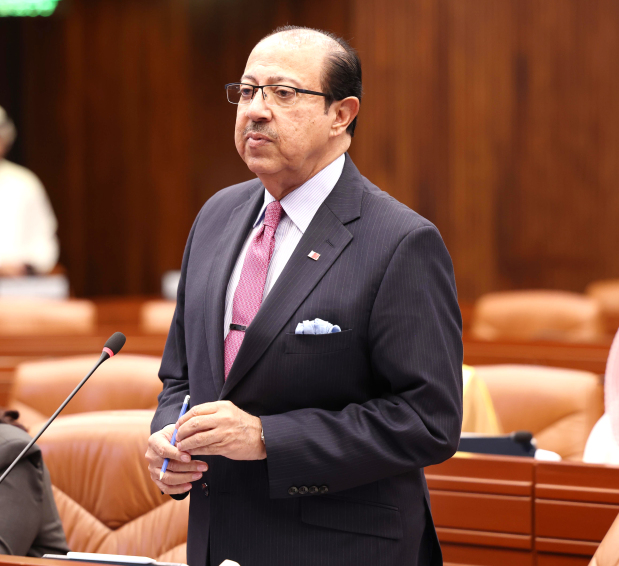
“We value the principles and foundations behind the proposed legislation, but many factors have been overlooked and this could lead to disastrous economic, financial and social consequences,” said committee chairman Khalid Al Maskati.
“This legislation will only reduce remittances made through official channels in favour of illegal money transfer systems,” he added.
“It will also encourage money laundering and the rise of blackmarket practices or unauthorised cryptocurrencies.
“All these will be a setback to the kingdom’s strong financial and banking sector.”
Mr Al Maskati added that the proposed legislation contradicts mutual and international agreements and conventions, while harming plans to attract and encourage investments.
“For instance, adopting the legislation would mean breaching the Unified Arab Investment Agreement which disallows imposing any restrictions – whether administrative, legal or financial – on Arab capital and investments.
“This move will just harm Bahrain’s ability to compete for foreign investments, making us the odd one out.”
In addition, implementing the legislation will not be easy as it is being imagined.
“These days money transfer transactions are being done by smart phones, credit cards or electronic wallets. And the money being remitted by an expatriate could be to repay owed to banks in their home countries,” explained Dr Al Maskati.
“Also, it is unclear if the tax is applicable on every service or purchase payment made using credit cards issued by foreign banks.
“The flaws are limitless and the legislation disregards all technical factors of implementation or punishments against violators who will clearly be difficult to track.”
Meanwhile, Shura’s legislative and legal affairs committee has warned that the legislation could be unconstitutional.
By law, the government is obliged to draft the Parliament-presented legislation within six months. However, it has asserted that a remittance tax would be unfair and ‘unconstitutional’.
This didn’t stop MPs from unanimously voting in favour of the legislation in their first session of the year.
Finance and National Economy Ministry officials said that the levy would contradict the basic principles of freedom of money transfer.
It also violates the concept of tax, as referenced by the Constitutional Court, as such levies should be inclusive, without anyone being singled out, which is not the case with this legislation, the officials pointed out.
“Bahrain has signed many international agreements and mutual pacts with countries across the world on the freedom of money transfer, which it is committed not to breach,” it added.
The proposed law also stipulates that the tax shall be paid during the transfer process at authorised financial institutions; the National Bureau of Revenue shall collect this tax from those institutions.
“The move will have a negative impact on the economy, in general, and the financial and commercial sectors, in particular,” said ministry officials.
“Imposing such a tax would cause massive damage as it will lead to the emergence of illegal transfer channels.
“The World Bank and the International Monetary Fund have, in numerous studies, shown that countries that took the approach have faced trouble controlling transfers and we do not want the same situation here.”
The ministry added that such taxes wouldn’t be paid by workers and would be forced on sponsors, which would add to the burden on businessmen.
“Such taxes will hugely affect expatriates in leadership positions in companies and banks in Bahrain and it could even lead to them moving to other countries,” it added.
“Bahrain is working towards being a more competitive regional hub. There are also companies that make regular transfers every day, in bulk, and such tax is just illogical and frustrating for them.
“Also, it is very difficult to differentiate between transactions – whether they are for purchases, services or money sent to families or relatives.”
Ministry officials said the legislation hurts Bahrain’s plans to attract investment and global brands and companies.
“We are in a competitive region and have to be considered as a strong choice for investments and this levy doesn’t help achieve that,” they added.
“The law is unclear with regard to punishments for violators. Also, who will monitor, inspect and implement the tax and from whom will the 2pc be taken and by whom.”
CBB officials said the move would create a black market for money transfers as expats or their employers would look for ways to evade the tax.
“The legislation has no exemptions and also includes expats in leadership positions who earn high wages in companies and banks headquartered in Bahrain. It could deter the progress of financial activities, should they opt out of the country.
“Expats also covers GCC nationals and a tax for all would be catastrophic with moves underway to integrate citizens of the six nations.”
The Bahrain Chamber, BAB and exchange companies have also rejected the proposal.
mohammed@gdnmedia.bh
&uuid=(email))