

Ten of Bahrain’s aspiring architects have drawn up ideas for buildings they might like to see in the kingdom’s near future, ranging from a reimagined skyscraper to a cutting-edge minimalist rehabilitation centre.
The students, who all study at the University of Bahrain’s (UoB) College of Engineering, recently had their design-stage graduation projects featured in Dezeen, an international London-based architecture, interiors and design magazine.
“At the most rudimentary level, architecture is defined as the ‘art of designing buildings’ to satisfy human needs – in fact, it is pretty complex and requires the knowledge base of art as well as science and more importantly, the task of designing, which involves creativity, imagination and spatial conceptualisation,” a UoB spokesperson said, in a statement.
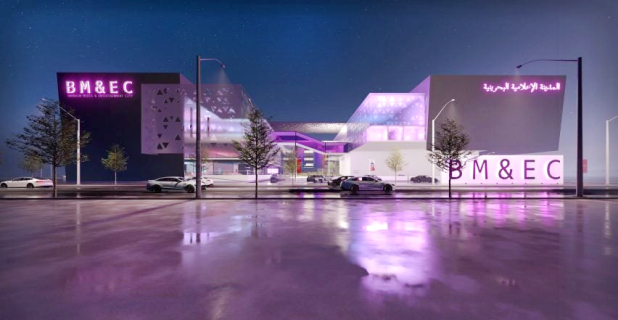
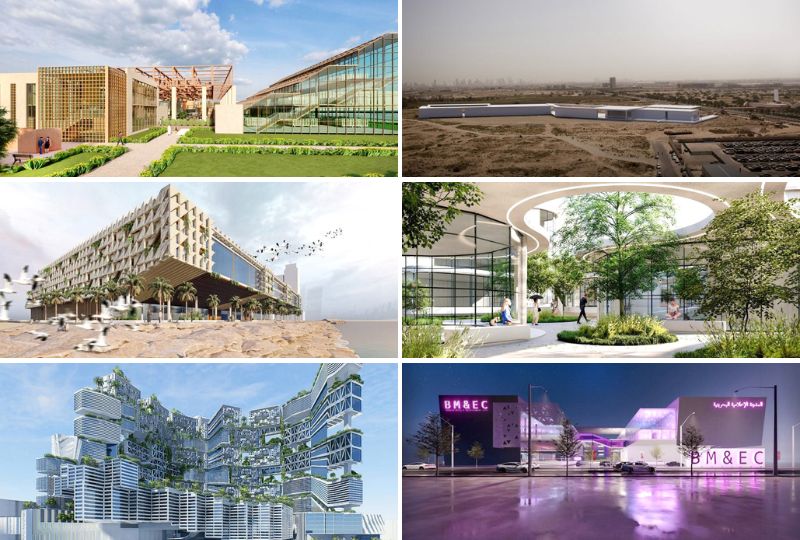
A concept of the ‘Bahrain Media and Entertainment City’ by Ms Al Dhaif
The project was done under the oversight of UoB architecture and interior design department faculty Professor Islam Hamdy ElGhonaimy, Dr Fatema Al Hammadi, Dr Osama Omar, Dr Ranjith Dayaratne, Dr Susana Soares Saraiva, Dr Wafa Al Ghatam and Lejla Karajica.
Students in the show include Walaa Sultan, Naufa Nalim, Zainab Abdulhussain Al Dhaif, Ebrahim Jameel Ebrahim, Fatima Sami, Husain Hani Matooq Fakhar, Maryam Tareq Hamada, Fatima Nader Ali, Jovianne A Francisco and Kawthar Shawqi Durazi.

The Centre for Sustainable Innovations by Ms Durazi
With an aim to encourage Bahrainis to consider skyscrapers as preferable to single houses, Ms Sultan came up with a mixed-use high-rise megastructure incorporating, ‘residential, commercial, office, recreational, cultural and educational elements as well as a 3D printing factory to create a self-contained community for densely populated areas and contribute to the reduction of car dependency, commuting times and urban sprawl’.
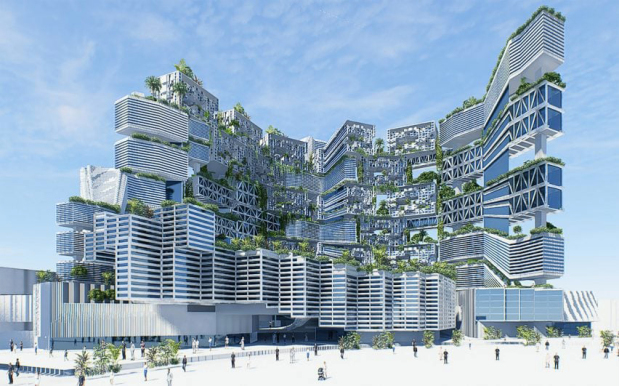
Ms Sultan’s reimagined skyscraper
Meanwhile, Ms Francisco turned inwards for inspiration, developing a plan for a mental health residential treatment and rehabilitation centre.
“This project aims to showcase how architecture serves not just as a structural covering but as a healing tool toward a pristine state of mind,” she explained.
“Serenity Village is a mental health residential treatment and rehabilitation centre that combines intensive and therapeutic care which caters to transitional recovery, from individual therapy to community involvement and self-reliance.

Serenity Village – a minimalist rehabilitation centre by Ms Francisco
“The architectural design’s minimalistic approach embraces functional clarity, facilitates freedom, structurally expressive forms and meticulous articulation of mass and void to create spaces that establish transparency, fluidity and tranquillity.”
Mr Ebrahim, on the other hand, sought to find a way to preserve the archaeological sites in Saar, dating back to the Dilmun Civilisation era, utilising a unique museum concept.
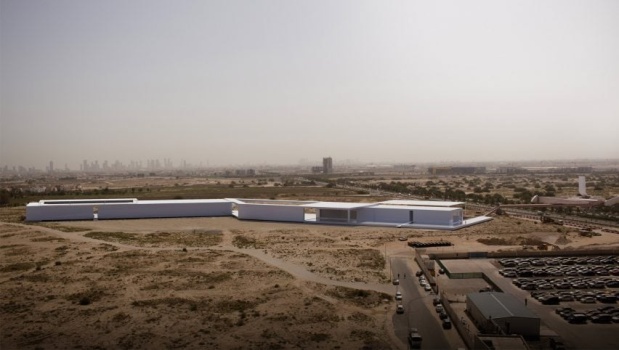
Dilmun Civilisation Museum by Mr Ebrahim
“The museum is envisioned as a series of transitional stations within the archaeological Dilmun sites of the historically isolated Saar region,” he explained.
“This approach seeks to address the disconnect caused by unplanned urban development that has severed the connection between the north and south, leading to the neglect and deterioration of these culturally significant areas.
“By reintegrating these archaeological gems into the public consciousness, the museum aspires to champion the preservation of Bahrain’s rich Dilmun legacy and foster a deeper appreciation for the nation’s heritage among its people.”
Other concepts include a sustainable agriculture and meditation centre by Ms Sami, a ‘Bahrain Agricultural Complex’ concept by Mr Fakhar, a post-retirement centre by Ms Hamada, Arab architects museum by Ms Ali, ‘National Agriculture Hub’ by Ms Nalim, a media and entertainment production district by Ms Al Dhaif and a sustainable innovations centre by Ms Durazi.
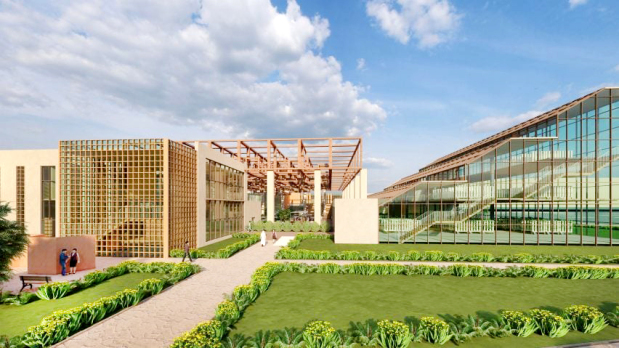
The National Agriculture Hub blueprint by Ms Nalim
naman@gdnmedia.bh
&uuid=(email))