

(1).jpg?20260916')
The Shura Council is set to debate a proposed legislation that seeks to reduce the mandatory threshold for contracts that must be reviewed by the Legislation and Legal Opinion Commission from BD300,000 to BD100,000.
Parliament had earlier approved amendments to the 2006 Legislative and Legal Opinion Authority Set-up Law that stipulate that all contracts exceeding BD100,000 must be submitted by ministries, institutions and public authorities to the commission for review.
Currently, only contracts worth or exceeding BD300,000 are submitted to the panel.
MPs believe that the proposed move would tighten oversight over government spending.
Justice, Islamic Affairs and Endowments Minister Nawaf Al Maawda warned that lowering the threshold to BD100,000 would overwhelm the commission due to the increasing number of government contracts lining up for reviews.

Mr Al Maawda
He stressed that sufficient oversight already existed through legal departments, the National Audit Office, Tender Board and the Finance and National Economy Ministry.
“The commission currently reviews around 450 contracts annually, the proposed amendment would double that burden without clear justification,” he said.
Meanwhile, the Shura Council’s legislative and legal affairs committee has recommended that the proposal be rejected.
“Contracts are already subject to several layers of financial and administrative oversight,” said committee chairwoman Dalal Al Zayed.
“Any government entity may voluntarily submit contracts below BD300,000 for review,” she added.
“The current threshold of BD300,000 was set in 2010 to offer procedural flexibility and account for inflation and the growing size of contracts.
“Reverting to the BD100,000 limit represents an unjustified reversal of an informed legislative policy.”
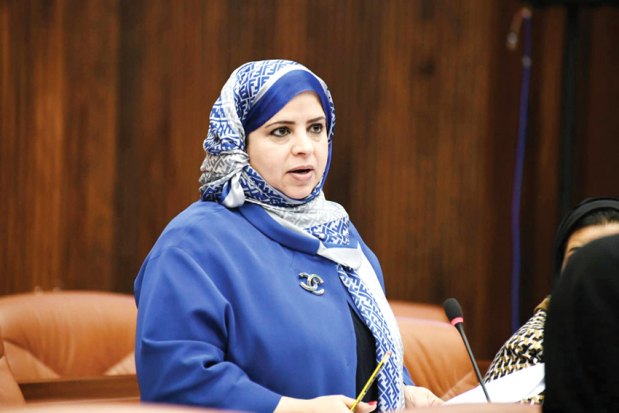
Ms Al Zayed
Ms Al Zayed said negative effects were expected should the legislation be given the go-ahead.
“There will be increased pressure on the commission and reduced quality of contract reviews,” she explained.
Ms Al Zayed said the proposed move would undermine the flexibility of government procedures and even hinder investments.
“It could negatively impact the quality of public services and delay project implementation,” she added.
“The current system allows any government body to seek the commission’s opinion on any contract, regardless of its value.
“The draft law fails to provide clear evidence of oversight gaps that warrants amending the existing law, and would impose administrative and financial burdens on the authority without proportionate benefit.”
Meanwhile, the Shura Council is also set to debate and vote on its audited closing financial statement for 2024.
Shura members will be notified about 15 reports on foreign participations that include parliamentary meetings in Tehran, Geneva, Baku, Abu Dhabi, Antalya, Baghdad and Luanda.
&uuid=(email))