

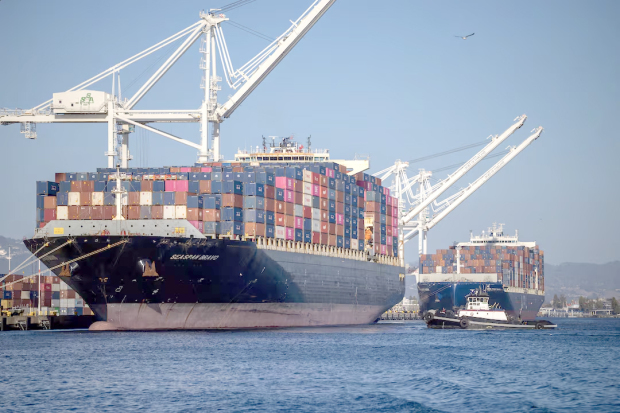
GROWTH in world trade in goods will slow down markedly to 1.9 per cent this year from 4.6pc in 2025 and could decelerate even more if the Middle East war continues to push energy prices higher and disrupt global transport, a World Trade Organisation (WTO) report said yesterday.
Last year a surge in artificial intelligence-related trade and goods front-loading to avoid a slew of US tariffs enabled a better-than-expected growth performance. While global trade remains resilient, buoyed by trade in AI-related products, the growth forecast is under pressure from the expanding US-Israeli war on Iran, WTO director-general Ngozi Okonjo-Iweala said.
If crude oil and liquefied natural gas prices remain high throughout 2026 due to the conflict, global trade in goods could slow further to 1.4pc, WTO economists said.
A prolonged blockade of the Strait of Hormuz by Iran, choking one-third of fertiliser urea imports, risks hitting major producers like India, Thailand, Brazil, fuelling food security risks, the WTO report said. Sustained high energy prices could shave 0.5 percentage points off global merchandise growth, with Asian and European fuel-reliant importers hit hardest.
Services trade also faces a 0.7-point drop from growth forecasts of 4.8pc to 4.1pc due to shipping and flights disruption, the report found. Last year services trade grew by 5.3pc.
Last year, world merchandise trade grew at nearly double the forecast rate as a surge in demand for AI-related goods, such as chips and semiconductors, offset the impact of US tariffs and subsequent trade turmoil, the report stated.
Trade in AI-enabling goods accounted for 42pc of global trade growth in 2025, despite representing only one-sixth of global trade. It increased by 21.9pc year-on-year to $4.18 trillion in 2025, according to the report.
&uuid=(email))