


A Bahrain-based breast cancer survivor has come forward to share her journey, coinciding with Breast Cancer Awareness Month in October, highlighting the importance of regular screening and early detection
American expatriate and retired school teacher Denise Kfoury first found out that she had the disease in 2008 when she underwent an ultrasound. She had been getting annual mammograms in the US prior to that.
Breast cancer is a kind of cancer that begins as a growth of cells in the breast tissue. According to the World Health Organisation (WHO), this year’s global campaign highlights the theme: Every Story is Unique, Every Journey Matters.
“We were in Saudi at the time and my friend urged me to get checked,” the 65-year-old told the GDN. “I argued that my doctor in the US knows me well but she insisted saying they would do an ultrasound at the hospital.
“My mother and grandmother had breast cancer and so I kind of always knew I would get it. It still was a shock when I found out. I wonder if I would have missed detecting it if I had not done the ultrasound,” the Jasra resident noted.
A mammogram uses low-dose X-rays to create images of breast tissue, while a breast ultrasound uses sound waves to create images. Mammograms are the standard for breast cancer screening but ultrasounds are useful for clarifying findings on a mammogram, especially in women with dense breasts, or when a palpable lump needs further investigation.
Ms Kfoury
Treatment was a ‘whirlwind’ with surgery, chemotherapy and medication during the following five years. Ms Kfoury also brought about lifestyle changes with a healthier diet and exercise. In 2013, she moved to Bahrain, believing the worst was behind her, only to find out last year that she had relapsed.
“My husband still works in Saudi and at the end of last year, we returned to the US for his project. When I went for my yearly mammogram, I was shocked to learn that the cancer had returned – this time in the other breast. It was a new tumour and more aggressive.”
Ms Kfoury smiles through her first chemo in Bahrain
Ms Kfoury had to undergo surgery again, as well as chemotherapy and immunotherapy. She will have to take anti-estrogen pills for five to 10 years. She is also undergoing treatment for lymphedema.
“Being physically active helps with the aches and pains that come with taking the pill. Last December, I could barely walk but now I am much better,” she added.
Studies have confirmed that a family history of breast cancer increases the risk of the disease, which makes regular screening necessary.
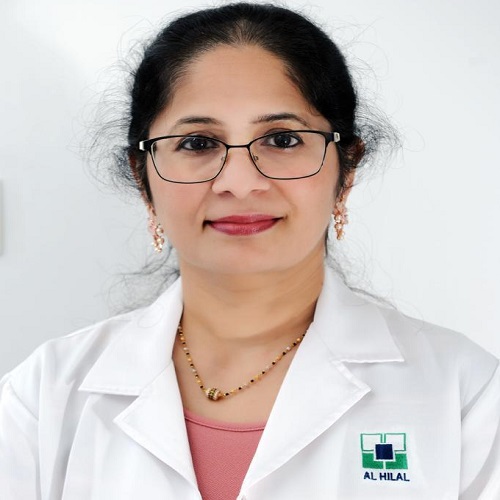
Dr Ramavath
“A mammogram remains the most reliable and effective test for early detection of breast cancer and is recommended for women over the age of 40,” Al Hilal Multi Speciality Medical Centre Adliya obstetrician and gynaecologist Dr Krishna Kavita Ramavath said. “However, in women who have dense breast tissue, a breast ultrasound may be added to provide more detailed information, as it can sometimes detect changes that a mammogram might miss.
“For women who are at higher risk, for example those with a strong family history of breast cancer or a genetic mutation like BRCA1 or BRCA2, a breast MRI may also be advised,” Dr Ramavath added.
The expert also advised regular clinical breast check-ups in addition to imaging tests. Screening plans, she noted, should always be personalised based on individual risk factors and discussed with the doctors
“It’s important for every woman to be familiar with how her own breasts normally look and feel, so that any new changes can be reported early.”
WHO lists breast cancer signs and symptoms
Most people will not experience any symptoms when the cancer is still early hence the importance of early detection. Breast cancer can have combinations of symptoms, especially when it is more advanced. Symptoms can include:
- A breast lump or thickening, often without pain
- Change in size, shape or appearance of the breast
- Dimpling, redness, pitting or other changes in the skin
- Change in nipple appearance or the skin surrounding the nipple (areola)
- Abnormal or bloody fluid from the nipple
In 2021, the WHO established the Global Breast Cancer Initiative, to bring together stakeholders from around the world and across sectors with the shared goal of reducing global breast cancer mortality by 2.5 per cent per year, thereby averting 2.5 million breast cancer deaths globally by 2040. The three pillars of action are: health promotion for early detection; timely diagnosis; and comprehensive breast cancer management.
melissa@gdnmedia.bh
&uuid=(email))