Bahrain's medical malpractice investigation committees operate with full independence and are not subject to the authority of government hospitals or health centres, it has been revealed.
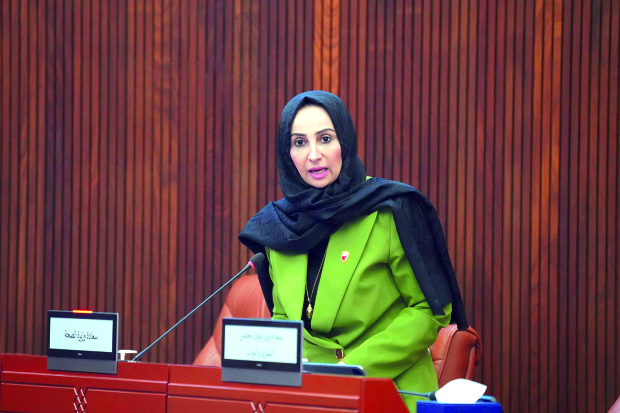
Health Minister Dr Jalila Al Sayyed gave the response in an official reply to a parliamentary question submitted by MP Jameel Hassan, who requested clarity on the role of government hospitals in probe committees, their power – if any – to suspend members, and the standards used to issue technical opinions.
Dr Al Sayyed stressed that these panels fall strictly under the National Health Regulatory Authority (NHRA), a body established by Law 38 of 2009 and reinforced by subsequent amendments.
“Medical malpractice committees are independent bodies regulated by the NHRA and supervised by the Supreme Council of Health (SCH). They do not operate under the authority of government hospitals, nor may any hospital suspend a committee member from work,” the minister clarified.
Mr Hassan had also asked whether technical opinions were influenced by policies of public hospitals. Dr Al Sayyed firmly rejected this notion.

Mr Hassan
“These committees apply internationally recognised medical and ethical standards across all specialties. Their work is not based on hospital policies but on global criteria designed to ensure impartiality, accuracy and fairness,” she stated.
The minister explained that the committees review:
- Patient complaints and inspection reports forwarded by NHRA.
- Reports submitted by employers regarding practitioners.
- Cases referred by judicial authorities requiring expert assessment.
Each committee is chaired by NHRA-appointed specialists and may also consult external experts ‘based solely on their scientific qualifications and experience, not their job titles or affiliations’, she noted.
While hospitals cannot intervene in the committees’ work, Dr Al Sayyed noted that the NHRA may request expert opinions from doctors working in public hospitals.
“Experts from government hospitals may be invited to provide insight, but they serve in their personal capacity and without voting rights. Their role is advisory and does not influence the committee’s independence,” she said. Committees may also form temporary sub-committees when needed for specialised investigations.
Dr Al Sayyed emphasised that oversight of investigation committees falls exclusively under the SCH, which also assumes the powers of the NHRA Board of Directors as per Decree-Law 32 of 2015.
“This structure ensures complete neutrality, transparency and insulation from institutional pressures,” she said.
In response to Mr Hassan’s query about the ministry’s involvement in monitoring probe committees, Dr Al Sayyed clarified that the Health Ministry does not direct their work.
“The ministry fully supports NHRA committees but does not interfere in investigations or technical decision-making. Our role is co-operation, facilitation and commitment to national health standards,” she affirmed.
Dr Al Sayyed reiterated the ministry’s commitment to co-operate with Parliament in all matters related to patient safety, regulatory development and accountability.
The topic is scheduled for debate during Tuesday’s weekly Parliament session.
mohammed@gdnmedia.bh