

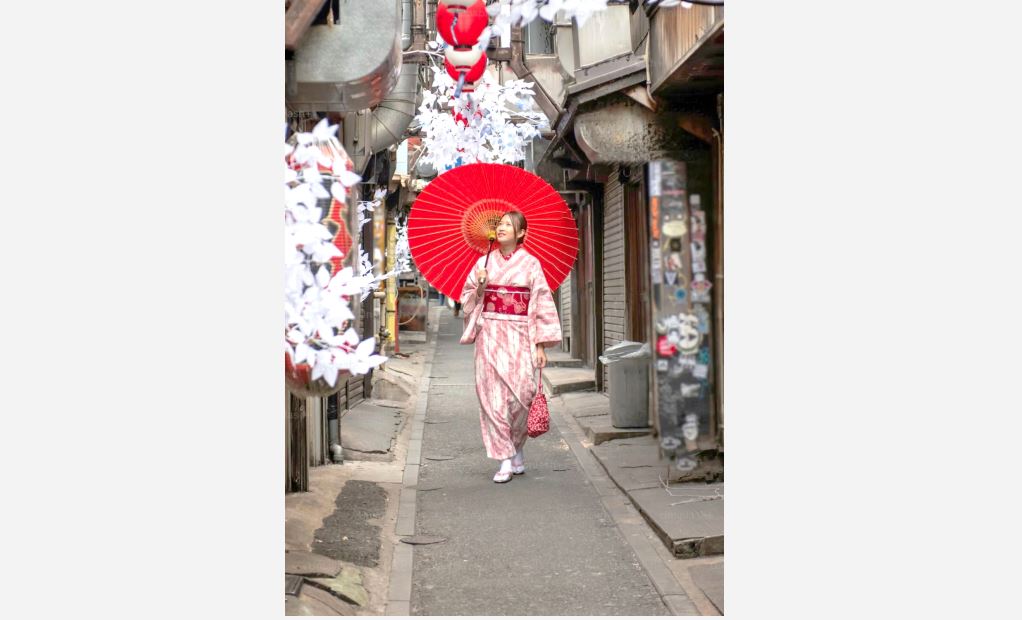
The kimono is far more than traditional Japanese clothing; it is a profound historical document draped in silk. Understanding the kimono requires looking past its aesthetic appeal to examine its origins, construction and rigid societal function.
Originating during the Heian period (794–1185), the garment evolved from early Chinese-influenced styles into a uniquely Japanese form. Its construction is defined by straight lines, created by cutting fabric in straight panels without shaping it to the body. This design prioritises the integrity of the textile over the silhouette of the wearer.
Historically, the material dictated function and status: silk was reserved for the aristocracy and formal occasions, while hemp, linen and eventually cotton were used for daily wear by the working class.
The importance of the kimono lies in its ability to communicate. It is a visual language where colour, pattern and style indicate the wearer’s age, gender, marital status and the formality of the event. Specific motifs convey messages regarding seasons or virtues, such as longevity or prosperity. For example, the furisode, with its long, swaying sleeves, is traditionally worn by unmarried women, while the tomesodeis is reserved for married women at formal events.
Today, while Western clothing is standard for daily life in Japan, the kimono retains immense cultural significance. It is strictly worn for pivotal moments; weddings, tea ceremonies, funerals and coming-of-age celebrations.
&uuid=(email))