

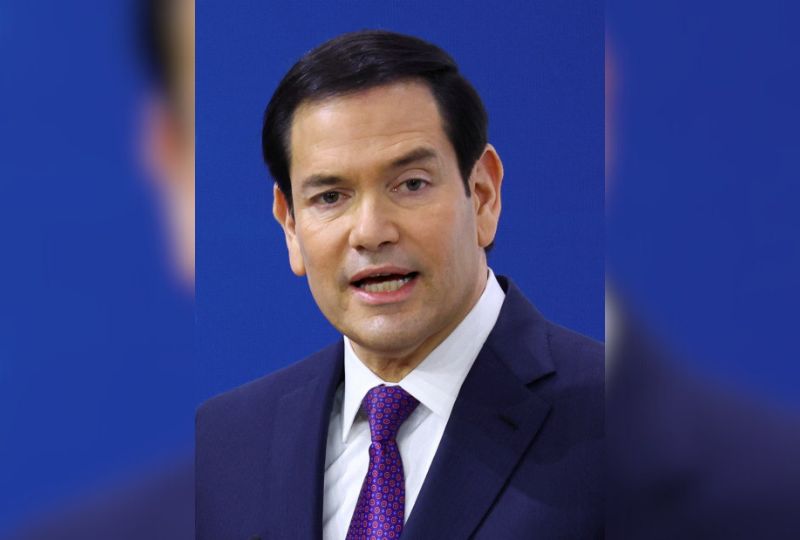
Secretary of State Marco Rubio cast the United States as the ‘child of Europe’ in a message of unity yesterday, offering some reassurance as well as levelling more criticism at allies after a year of turmoil in transatlantic relations.
Rubio was addressing the annual Munich Security Conference, where Europe’s leading powers have tried to project their own independence and strength while straining to keep an alliance with the US under President Donald Trump alive.
The speech delivered a degree of reassurance to European countries who fear being left in the lurch on anything from the war in Ukraine to international trade ructions in a rapidly shifting global order.
But it was short on concrete commitments and made no mention of Russia, raising questions on whether Rubio’s more emollient tone than that of Vice President JD Vance at the same event a year ago would change the underlying dynamics.
“In a time of headlines heralding the end of the transatlantic era, let it be known and clear to all that this is neither our goal nor our wish, because for us Americans, our home may be in the Western Hemisphere, but we will always be a child of Europe,” Rubio said.
“For the United States and Europe, we belong together,” he said in a speech that drew a standing ovation at the end.
European Commission President Ursula von der Leyen said she was ‘very much reassured’ by the speech and German Foreign Minister Johann Wadephul called him a ‘true partner’, others struck a more cautious tone.
“I am not sure that Europeans see the announced civilisational decline, supposedly caused mainly by migration and deindustrialisation, as a core uniting interest. For most Europeans, the common interest is security,” said Gabrielius Landsbergis, former foreign minister of Nato member Lithuania.
“This was not a departure from the general position of the (Trump) administration. It was simply delivered in more polite terms,” he said on X. One particular area of anxiety is Ukraine, where allies have long worried about Trump and Russia’s Vladimir Putin trying to ram through a deal on Moscow’s terms and force Kyiv to cede land to end Europe’s deadliest conflict since the Second World War.
US-brokered peace talks resume next week in Geneva after a sustained bombardment of Ukrainian cities during one of the coldest winters in years killed civilians and left hundreds of thousands of people without power and water.
l President Volodymyr Zelenskiy expressed hope at the conference yesterday, but worried that Ukraine was being asked ‘too often’ to make concessions in the negotiations.
“We truly hope that the trilateral meetings next week will be serious, substantive, helpful for all of us but honestly sometimes it feels like the sides are talking about completely different things,” Zelenskiy said in a speech.
The Ukrainian leader said he was feeling ‘a little bit’ of pressure from Trump, who had said Zelenskiy should not miss the ‘opportunity’ to make peace soon.
“The Americans often return to the topic of concessions and too often those concessions are discussed only in the context of Ukraine, not Russia,” Zelenskiy said.
&uuid=(email))