

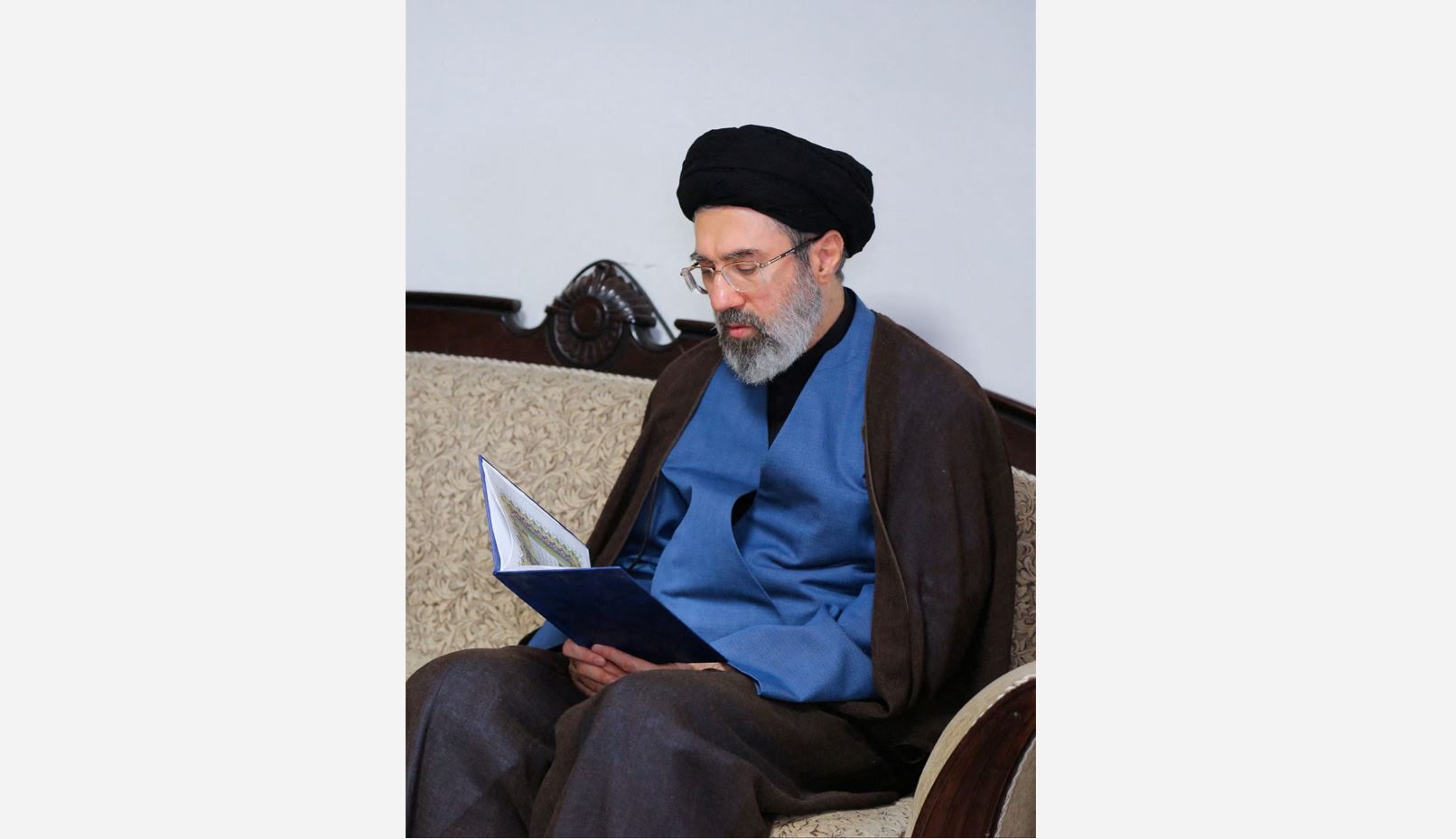
Iran last night named Mojtaba Khamenei to succeed his father Ali Khameneias Supreme Leader, signalling that hardliners remain firmly in charge in Tehran a week into its conflict with the US and Israel.
Mojtaba, a mid-ranking cleric with influence inside Iran’s security forces and vast business networks under his father, had been seen as a frontrunner in the lead up to the vote by the assembly, a body of 88 clerics charged with choosing the new leader after Ali Khamenei.
“By a decisive vote, the Assembly of Experts, appointed Ayatollah Seyyed Mojtaba Hosseini Khamenei as the third Leader of the sacred system of the Islamic Republic of Iran,” the assembly said in a statement issued just after midnight Tehran time.
The position gives Mojtaba the final say in all matters of state in the Islamic Republic.
Mojtaba’s appointment will likely draw the ire of US President Donald Trump, who said yesterday that Washington should have a say in the selection. “If he doesn’t get approval from us, he’s not going to last long,” he told ABC News. Israel, ahead of the announcement, threatened to target whoever was chosen.
Mojtaba’s father, Supreme Leader Ali Khamenei, was killed in one of the first strikes launched against Iran more than a week ago.
The US military yesterday reported a seventh American has died from wounds sustained during Iran’s initial counter-attack a week ago, a day after Trump presided over the return to the US of the remains of the six others who died. The US-Israeli attacks have killed at least 1,332 Iranian civilians and wounded thousands, according to Iran’s UN ambassador.
As Trump pressed for an “unconditional surrender,” Mohammad Bagher Qalibaf, Iran’s parliament speaker, said Tehran was not seeking a ceasefire to the war and would punish aggressors.
Israel continued to target senior Iranian figures, including Abolqasem Babaian, the recently appointed head of the military office of the supreme leader, saying he was killed in a Saturday strike.
As fighting escalated on day nine of the US-Israeli campaign against Iran, thick black smoke hung over Tehran yesterday, residents said, after strikes on oil storage facilities had lit up the night sky with plumes of orange flame.
Iran’s foreign ministry spokesperson Esmaeil Baghaei said the large-scale attack marked a “dangerous new phase” of the conflict and amounted to a war crime.
“By targeting fuel depots, the aggressors are releasing hazardous materials and toxic substances into the air,” he wrote on X.
Israeli military spokesman Lieutenant Colonel Nadav Shoshani told reporters the depots were used to fuel Iran’s war effort, including producing or storing propellant for ballistic missiles. “They are a legal military target,” he said.
Israeli Prime Minister Benjamin Netanyahu said his government would press on with the assault and strike Iran’s rulers “without mercy”.
“We have an organised plan with many surprises to destabilise the regime and enable change,” he said in a video statement.
US special envoy Steve Witkoff and Trump’s son-in-law Jared Kushner will visit Israel tomorrow, according to Axios, citing a senior US official.
Trump told reporters on Air Force One that he was not seeking negotiations to end the conflict, which has driven up global energy prices, disrupted business and snarled air travel.
“At some point, I don’t think there will be anybody left maybe to say, ‘We surrender’,” he said.
Saudi Arabia, Kuwait and the UAE reported Iranian drone attacks on Saturday and yesterday, including a huge fire that engulfed a government office block in Kuwait.
Kuwait’s interior ministry said two officers were killed, while the UAE said four migrant workers had died in Iranian attacks there so far.
The UAE said air defence teams had knocked out 16 ballistic missiles and 113 drones fired towards the Gulf state yesterday. One missile fell in the sea and four drones hit the country’s territories.
On Saturday, Iran accused the US of striking a desalination plant on Qeshm Island, disrupting water supplies to 30 villages and calling it “a dangerous move with grave consequences.”
In Saudi Arabia, two people were killed and 12 injured after a projectile hit a residential area in Al Kharj city, the Civil Defence agency said.
Riyadh has told Tehran that continued Iranian attacks on the kingdom and its energy sector could push Riyadh to retaliate, people familiar with the matter told Reuters.
Qatari Prime Minister Shaikh Mohammed bin Abdulrahman Al Thani in a Sky News interview aired yesterday urged all sides involved in the Iran conflict to de-escalate.
“We will continue talking to the Iranians, we will continue trying to seek de-escalation,” the prime minister said in the interview.
He said that the latest events had delivered “a huge shake-up” to the trust underpinning their relationship with Iran.
“For the US, we would like to see a de-escalation, we would like to see ... a diplomatic solution that addresses our concerns as well as their concerns,” he added.
“We need to ensure, first, that Iran should stop all attacks against Gulf countries and other countries that they are attacking and are not party of this war,” he said.
Israel’s military said it struck Iranian commanders in the Lebanese capital early yesterday, expanding the scope of strikes to the heart of Beirut after days of strikes that have left nearly 400 people dead.
The drone strike was the first within the city limits of Lebanon’s capital since Israel-Hizbollah hostilities resumed last week, and came amid heavy bombardment on Beirut’s southern suburbs and the country’s south and east.
Israel said it targeted key commanders of Iran’s elite Quds Force of the Revolutionary Guards but did not name them.
“The commanders of the Quds Force’s Lebanon Corps operated to advance terror attacks against the state of Israel and its civilians, while operating simultaneously for the IRGC in Iran,” the Israeli military said in a statement.
An Israeli military source said the strike targeted five senior Quds Force members, including intelligence and finance personnel.
Lebanon says four people were killed in the strike, part of a rapidly rising death toll that has reached 394 people, the health ministry said yesterday, including at least 83 children and 42 women.
Lebanon’s health ministry does not otherwise distinguish between civilians and military personnel.
Israel’s military has so far killed about 200 Hizbollah militants, spokesman Nadav Shoshani said in an online briefing. Hizbollah has not published a toll for its fighters.
Lebanon was pulled into the widening US-Israel war with Iran on Monday after the Iran-backed militant group Hizbollah fired into Israel. Israel responded with heavy strikes across southern and eastern Lebanon and near Beirut.
Some of the deadliest bombardment took place in the last two days in eastern Lebanon, when 41 people were killed during a rare Israeli airborne raid deep into Lebanese territory.
Read more:
Aerial aggression causes 120 incidents
CBSE postpones Class 12 exams
Bahraini society a model of coexistence and tolerance
&uuid=(email))