

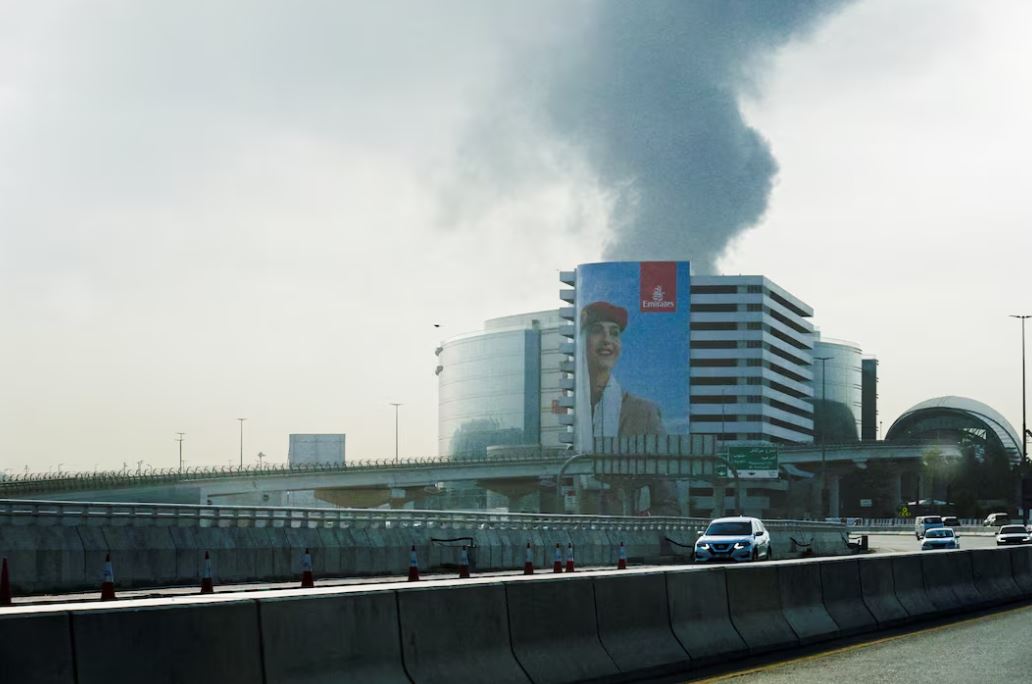
Dubai’s international airport was gradually resuming flights yesterday after a fuel tank fire caused by a drone attack forced a temporary closure and flights to reroute, spotlighting the challenge for airlines grappling with the Middle East crisis.
The US-Israeli war against Iran, now in its third week, has thrown global aviation into turmoil, with flights cancelled, rescheduled and rerouted, as most Middle East airspace stays shut over fears of missile and drone attacks.
With the Gulf a global crossroads for commercial aviation, the war has disrupted travel, sent fuel charges and ticket prices surging, hit flows of goods such as critical medicines and thrown holiday plans into disarray.
Yesterday’s incident, causing a fuel tank blaze but no injuries, is the third attack on the Dubai airport since Iran launched assaults on Gulf nations on February 28, with strikes Tehran says aim at the US presence in the region. While the UAE and other Gulf countries host US military facilities, Iran has used missiles and drones to target civilian facilities such as airports, hotels and ports.
Flights in the region are at about half their usual level, though their number has risen from just after the start of the war.
Drone and missile fire has regularly kept aircraft circling Dubai’s busy airport, heavily affecting Middle East tourism worth about $367 billion a year. Air freight rates have also surged as much as 70 per cent on some routes.
In a statement on X posted by the Dubai Media Office earlier yesterday, the Dubai Civil Aviation Authority flagged a ‘gradual resumption’ of some flights to selected destinations.
Reuters could not immediately establish how many scheduled commercial flights were due to depart from the hub, which last year handled over 1,000 flights per day. Emirates airline said it expected to partially resume operations at 0600 GMT after the attack, which prompted authorities to divert some flights to the smaller Al Maktoum international airport.
&uuid=(email))