

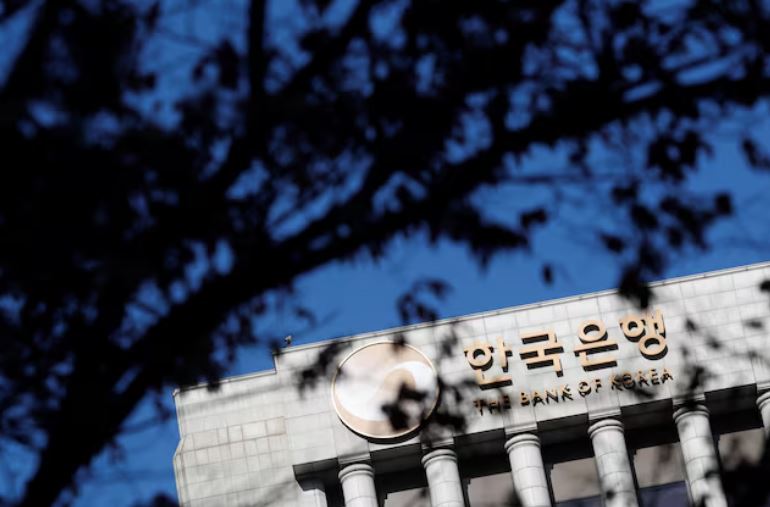
South Korean economist Shin Hyun-song, best known for predicting the 2008 Global Financial Crisis, was named yesterday to head the country’s central bank, just as it faces economic pressures resulting from patchy domestic growth and the Iran war.
President Lee Jae Myung chose Shin – currently head of the economic department at the Bank for International Settlements (BIS), dubbed the central bank for the world’s central banks – to replace Rhee Chang-yong as Bank of Korea (BOK) governor when his term ends on April 20.
In a statement released by the central bank, Shin said he would seek a “balanced” policy approach with inflation, growth and financial stability under consideration.
“Volatility in financial and foreign exchange markets, as well uncertainty over the economic outlook, heightened recently on rapid changes in the Middle East situation,” Shin said.
Shin, who has an academic reputation defined by his consistent warnings against excessive borrowing, faces immediate challenges from Middle East-driven inflation and uneven growth.
“As seen in the recent Middle East situation, domestic and global economic conditions are not separate from each other, which will make his expertise stand out even more,” a spokesperson at the presidential Blue House told a briefing.
He takes over the top central bank job at a time when policymakers face a delicate balancing act between supporting growth and containing financial stability risks stemming from surging household debt and the Iran war.
Although high-tech sectors including the semiconductor industry are thriving, recovery remains uneven as traditional sectors such as steel and petrochemicals struggle due to weak external demand.
The BOK in February left its benchmark interest rate unchanged at 2.50 per cent, and signalled it is likely to keep rates steady until at least August this year.
Many of Shin’s remarks in previous interviews were about the need for major policy efforts to deleverage amid surging household debt, to avoid the kind of financial crisis the country has seen in the past and also to curb red-hot property prices around Seoul.
&uuid=(email))