

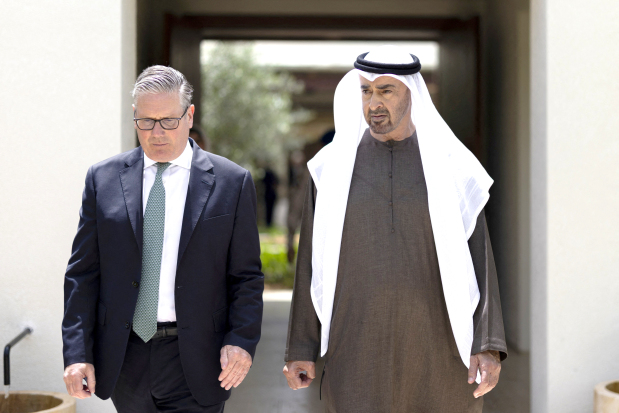
President Shaikh Mohammed received UK Prime Minister Keir Starmer yesterday, with the two leaders discussing the implications of Iran’s attacks on the UAE and neighbouring nations.
During the meeting in Abu Dhabi, Shaikh Mohammed and Starmer discussed the implications that developments in the Middle East hold for regional and international security.
The leaders addressed Iran’s targeting of civilians and non-military infrastructure in the UAE and other countries in the region, state news agency Wam reported.
Starmer said the UK stood in solidarity with the UAE when it came to measures taken to defend itself, and ensure the safety of its territory and people.
They also reviewed the progress of UAE-UK relations and explored means of bolstering those ties to the benefit of both nations.
The meeting was attended by Shaikh Tahnoon bin Zayed, Deputy Ruler of Abu Dhabi and National Security Adviser; Shaikh Hamdan bin Mohamed, Deputy Chairman of the Presidential Court for Special Affairs; Shaikh Mohammed bin Hamad, Adviser to the UAE President; and several ministers and officials, Wam reported.
The British Prime Minister arrived in the UAE yesterday morning on the second leg of his trip to Gulf amid signs the US-Iran ceasefire is coming under strain.
He was welcomed to Abu Dhabi by Khaldoon Al Mubarak, chairman of the Executive Affairs Authority.
Starmer is visiting allies in the region for discussions on upholding the pause in fighting and on the moves necessary to ensure safe shipping through the Strait of Hormuz is resumed.
On Wednesday, he spoke to Saudi Crown Prince and Prime Minister Prince Mohammed bin Salman bin Abdulaziz Al Saud in Jeddah.
They said it was vital to work towards reopening the strait, and discussed the UK’s efforts to convene partners to agree and plan practical steps to give the shipping industry the confidence to transit the waterway.
“Reflecting on the defensive operations which have taken place in the region since the conflict began, the Prime Minister thanked His Royal Highness for Saudi Arabia’s efforts to protect British nationals in the country,” a UK statement read.
“The Prime Minister committed to continue to support Saudi Arabia as a steadfast ally, including through the recent deployment of the Sky Sabre air defence system, having met UK personnel deployed to operate it earlier today.
“The leaders then discussed how the UK and Saudi Arabia could further deepen their defence industrial co-operation to boost capability and mutual security for the long term, as well as continuing to grow their thriving trade and investment relationship.”
On Wednesday, the UAE said it was ‘seeking further clarification’ on how the conditional ceasefire deal would prevent future Iranian attacks and ensure the reopening of the Strait of Hormuz.
The Ministry of Foreign Affairs said Iran’s weeks of attacks on the Gulf ‘necessitate a firm position, including ensuring that Iran is held accountable and fully liable for damages and reparations’.
It called for a ‘comprehensive and sustained approach that addresses Iran’s full range of threats’, as Washington and Iran prepare to hold talks in Pakistan this weekend.
Dr Anwar Gargash, diplomatic adviser to the President, said people “should not be surprised” by the ministry’s statement on the ceasefire.
“This clarity is essential following a treacherous and premeditated aggression,” Gargash wrote on X.
“The era of courtesies has passed and frankness has become a necessity. Our collective stance must be firm and clear towards the features of the upcoming phase, in a way that enhances stability and security in the region.”
&uuid=(email))