

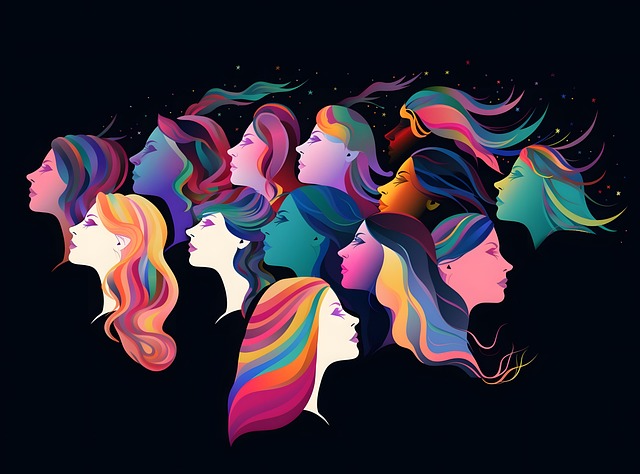
To understand the future of feminism in the Gulf, we need to look at the generation growing up in this region.
Generation Z women are often seen as global citizens, digitally connected, socially aware, and exposed to ideas that cross borders. However, in the Gulf, this global awareness does not replace local identity. Instead, it interacts with it, subtly reshaping it in important ways.
These young women are not stuck between two worlds. They are learning to move in both.
Unlike earlier generations who faced clearer cultural or ideological boundaries, Gen Z women navigate a more fluid landscape. They feel comfortable taking part in international discussions on gender equality while staying rooted in their cultural, religious, and social contexts.
This leads to something new: a form of feminism that is not just imported but adapted.
Instead of fully adopting Western feminist ideas, many young women in Bahrain and throughout the Gulf are choosing, adjusting, and reshaping concepts to fit their realities. They are not debating whether to be traditional or modern but exploring how both can coexist. In doing this, they move beyond binary thinking towards a more integrated sense of identity.
This process may not always be apparent, but it brings big change.
Social media provides insight into this shift. While platforms are often viewed as loud spaces, in the Gulf, they are used more thoughtfully.
Gen Z women curate their voices thoughtfully, sharing views, supporting causes, and engaging in conversations, all while being mindful of the context. Their expression is intentional, not impulsive.
Once again, silence is significant.
Deciding what to withhold can be just as crucial as what is said. This is not simple self-censorship but a form of cultural intelligence – an understanding of how messages travel, how they are received, and how to create lasting impact.
This generation also redefines what success means.
For many, empowerment is not just about career achievements or public recognition. It includes balance, well-being, meaningful work, and connection to personal values. Leadership is not only about reaching the top; it’s also about creating environments that reflect who they are.
This signals a broader shift towards what can be called hybrid identities.
Gen Z women in the Gulf are not rejecting tradition, nor are they accepting it without question. They engage with it – questioning, redefining, and sometimes quietly transforming it from within. Their identities are not fixed; they are negotiated across spaces, roles, and expectations.
This fluidity can be difficult.
Balancing multiple expectations, global and local, modern and traditional, seen and unseen, demands constant adjustment. It means making choices that aren’t always clear-cut and finding ways to stay true to themselves in complex situations.
Yet, this complexity also creates opportunity.
By moving between different worlds, Gen Z women are in a unique position to reshape discussions around feminism and leadership in the Gulf. They are not just taking on existing frameworks; they are redefining them.
And they do this in ways that are often subtle, yet very intentional.
The result is a form of empowerment that focuses less on declaring change and more on living it. It’s less about opposition and more about growth.
In the Gulf today, the future of feminism might not only be found in louder voices.
It may also be found in those who know how to navigate both worlds and, by doing so, create something entirely their own.
&uuid=(email))