

Parliament yesterday unanimously approved a draft law ratifying an agreement between Bahrain and Pakistan that allows convicted prisoners to serve custodial sentences in their home country under strict legal conditions. The legislation now moves to the Shura Council for review.
The agreement – comprising 22 articles – establishes procedures for transferring sentenced persons at their request, or that of a legal representative, provided there is a final court ruling, voluntary consent and approval by both states.
Each country will designate a central authority to handle requests through diplomatic channels, while the receiving state continues executing the sentence in line with its own laws.
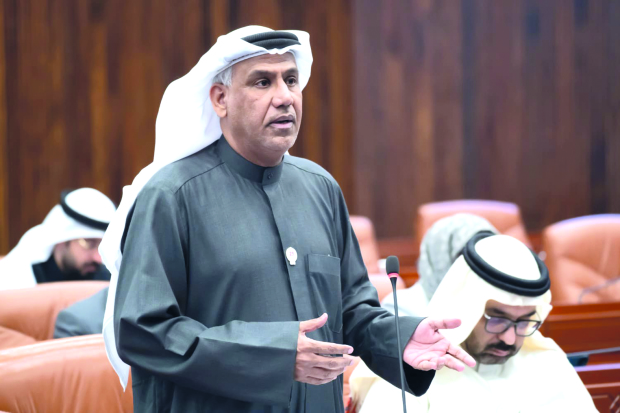
Second deputy speaker Ahmed Qarata welcomed the pact but urged the government to go further.
“We support this type of agreement and stress its importance,” he said. “But transferring people sentenced to custodial terms should not stop here. It must be completed through other agreements, foremost among them extradition and the enforcement of court judgments.”
He said that some rulings issued in Bahrain fail to find enforcement abroad – even through Interpol channels – because certain constitutions bar the extradition of citizens.
“If the agreement remains confined to transferring convicted prisoners, it deals with only one side of the matter,” he said. “If extradition and judgment enforcement agreements are added, we will have a full legal framework that protects citizens, traders and the Bahraini economy.”
Mr Qarata urged the government to pursue similar agreements with countries that supply the largest numbers of expatriate workers.
MP Mohammed Al Ahmed said the scale of Asian communities in Bahrain made it essential to expand such agreements accordingly, echoing calls for parallel treaties on judgment enforcement to prevent offenders from evading penalties by returning to their home countries. According to the Justice, Islamic Affairs and Endowments Ministry, the framework aligns with international best practice and does not impose additional financial burdens on Bahrain.
The National Institution for Human Rights also endorsed the draft, stating it is consistent with constitutional principles and international human rights obligations.
Key provisions require both sides to notify each other of sentence completion, escape incidents or early termination. Rules governing pardon, amnesty or sentence reduction will be handled through mutual consultation, while transfer costs are borne by the receiving state, except for expenses incurred within the sentencing country.
MPs said allowing prisoners to serve sentences closer to their families supports rehabilitation and reintegration while preserving the sovereignty and legal systems of both states.
• Meanwhile, a draft law approving Bahrain’s accession to Annex VI of the International Convention for the Prevention of Pollution from Ships was also unanimously approved by MPs. It aims to tighten controls on air pollution from maritime operations and align the kingdom with global environmental standards.
The committee said the step would strengthen Bahrain’s environmental governance and support its long-term climate commitments, including progress towards net-zero emissions by 2060 and the National Air Quality Strategy.
Present at the deliberations was Transportation and Telecommunications Minister Dr Shaikh Abdulla bin Ahmed Al Khalifa.
The two legislations have been forwarded to the Shura Council for review.
• MPs yesterday decided to withdraw a new social protection law that aims to bring together Bahrain’s main subsidies and allowances under one system. The proposed legislation, known as the ‘social protection support basket’, would combine various forms of government aid – including cost‑of‑living support, food and fuel subsidies, housing and education assistance, and electricity and water support – into a single legal framework.
&uuid=(email))