

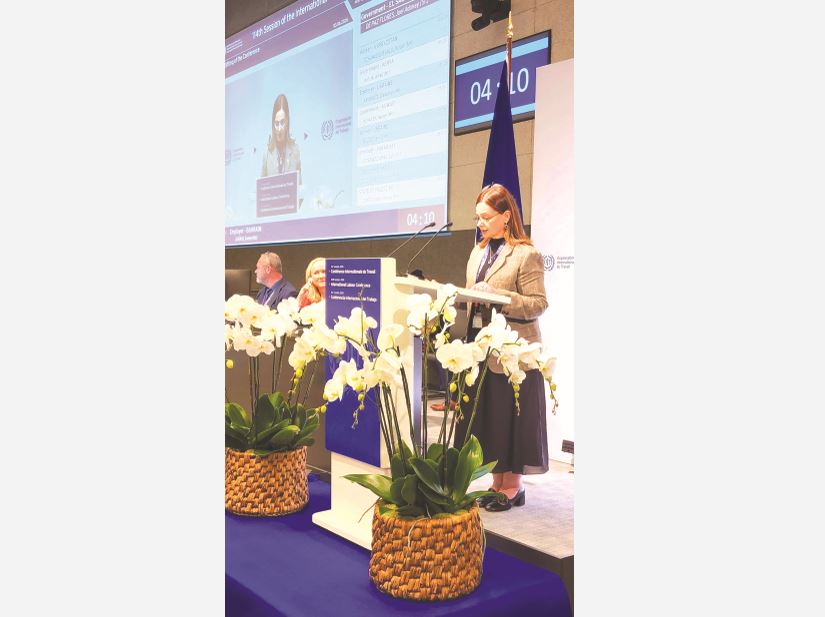
Escalating Middle East tensions could wipe out roughly 36 million jobs globally by 2027 if left unchecked, a top Bahraini business leader has warned.
Bahrain Chamber board member Sonya Janahi sounded the alarm during her address at the 114th session of the International Labour Conference in Geneva.
Representing Bahraini business owners and the kingdom’s private sector, Ms Janahi called for urgent, co-ordinated international action to mitigate the severe economic fallout radiating from regional geopolitical instability.
“Escalating tensions in the region have become a global challenge, impacting trade, investment, energy prices and transportation,” Ms Janahi told global delegates, citing alarming projections from international reports.
She noted that the ripple effects are placing unprecedented pressure on economies, businesses and labour markets worldwide, with the private sector bearing the brunt of the crisis.
Companies are grappling with a toxic mix of surging operational costs, spiked energy and insurance premiums, crippled supply chains and a sharp drop in investor confidence, she said.
Ms Janahi made a specific case for small and medium-sized enterprises (SMEs), noting that these critical engines of economic growth and job creation require enhanced, targeted support to survive the ongoing turmoil.
Highlighting Bahrain’s strategic vantage point, she reminded the assembly that the security and stability of the Gulf region remain non-negotiable anchors for the global economy.
“The stability of maritime routes and supply chains in the region directly impacts the stability of global markets and investor confidence,” Ms Janahi stressed.
She underscored that protecting international maritime corridors and ensuring the absolute freedom of navigation are fundamental pillars for global energy security and international trade.
She urged global leaders to deploy enhanced diplomacy, dialogue, and international co-operation to shield the global economy and empower the private sector to adapt to rapid changes.
Beyond the macroeconomic crisis, Ms Janahi also took centre-stage at the conference by chairing a critical high-level General Debate titled, ‘Advancing the Transformative Agenda for Gender Equality in the World of Work’.
The committee tackled major hurdles facing women’s economic participation and reviewed progressive policies designed to foster inclusive, equitable and decent work environments.
Ms Janahi emphasised that boosting women’s integration into diverse economic sectors is not just a social imperative but a core commercial driver.
“Women’s economic empowerment is a fundamental pillar for achieving comprehensive development and enhancing labour market productivity,” she stated.
True, sustainable economic growth and societal prosperity, she concluded, can only be achieved on a foundation of peace, stability and respect for international law, and state sovereignty.
&uuid=(email))