

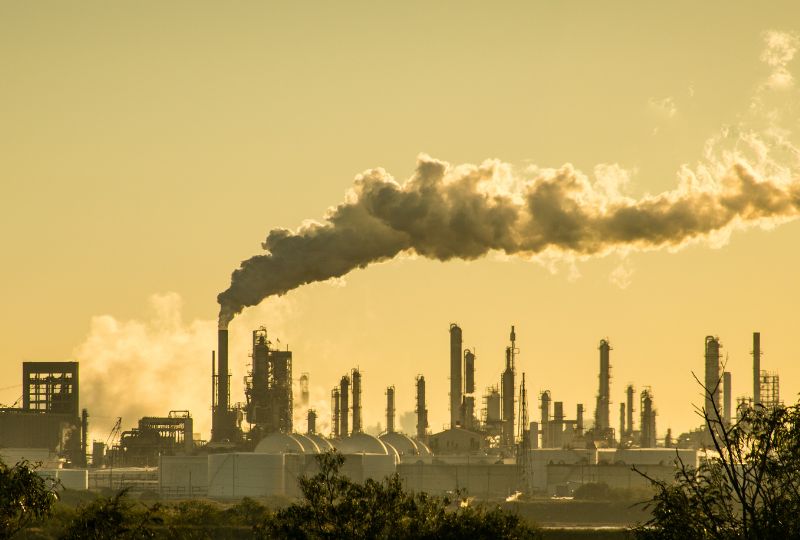
Energy transition is often discussed in sweeping terms. Global headlines focus on net-zero goals, phasing out fossil fuels, and replacing them with renewables. But behind those headlines lies a more complex and practical question. How will this transition affect the industries that still rely on oil, gas, and other carbon-intensive inputs to operate?
In the GCC, this is not a theoretical issue. It is already reshaping how businesses plan, operate, and compete. While governments across the Gulf continue to lead on energy diversification, industries must now adapt to a growing set of regulations and expectations tied to carbon reduction. The pace of this change is accelerating, and the consequences of inaction are becoming harder to ignore.
For fossil-fuel-driven industries in our region, the message is clear. The energy transition is not a distant policy discussion; it is a pressing reality. It is here and now is the time to prepare seriously for it.
A shifting regulatory environment
Across the world, environmental regulations are becoming stricter. In Europe, the introduction of the Carbon Border Adjustment Mechanism (CBAM) has added a new layer of accountability for producers of steel, cement, and aluminium. These sectors form the backbone of many economies in the GCC. If producers in our region cannot demonstrate lower emissions or a credible path toward decarbonisation, they may soon face tariffs or limited access to key markets.
The European Union is not alone. Many financial institutions now require companies to disclose emissions and demonstrate sustainability practices before granting funding. Ratings agencies have started factoring environmental performance into risk assessments. These trends are not limited to Western investors. Gulf-based banks and regulators are also moving in this direction.
Saudi Arabia, for example, has begun to align with global ESG frameworks through the Capital Market Authority . In the UAE, companies are now expected to improve sustainability reporting and energy efficiency, especially in the industrial and real estate sectors. Bahrain has initiated efforts to introduce green financing tools and encourage ESG compliance for public and private entities.
Industries cannot afford to treat these developments as short-term compliance issues. They signal a permanent shift in how the world defines competitiveness.
The local pressure is building too
Global policy is only part of the story. Energy transition is now embedded in national strategies across the Gulf. These strategies target emissions not just from power generation, but also from the demand side. That includes industrial users, construction, transport, and desalination.
Take power generation as an example. Historically, most electricity in the GCC has been generated using natural gas or, in some cases, liquid fuels. But with peak demand growing and pressure mounting to reduce emissions, governments are introducing stricter efficiency standards, fuel diversification plans, and renewable energy targets.
The UAE’s Energy Strategy 2050, Saudi Arabia’s Vision 2030 , and Oman’s National Energy Strategy all reflect this direction. Bahrain has committed to reducing emissions and improving efficiency through its National Energy Efficiency Action Plan (NEEAP). These strategies are not symbolic. They are already influencing licensing processes, procurement rules, and grid integration standards.
As a result, industrial users face higher expectations to use energy more efficiently, invest in emissions reduction, and modernise outdated systems. In many cases, failure to do so will lead to higher operational costs or restricted access to incentives and government contracts.
Who is most affected?
Industries with high energy intensity and emissions exposure will feel the transition most directly. These include:
l Cement and construction materials: As governments tighten emissions reporting and introduce sustainable building codes, cement producers will face more scrutiny over their production methods.
l Metals and aluminium: Sectors that rely on high-heat processes and large power inputs will need to adopt cleaner fuels or carbon capture technologies to remain competitive.
l Oil and gas refining: Refineries and petrochemical plants face increasing pressure to monitor and reduce their Scope 1 and 2 emissions, while adapting to cleaner fuels and processes.
l Transport and logistics: Heavy transport, aviation, and shipping are starting to face new fuel standards and tracking requirements. Transitioning to electric, hydrogen, or hybrid systems may become a necessity rather than a choice.
l Desalination and water infrastructure: These systems require vast amounts of energy. Governments are now exploring ways to power them with renewables or integrate them into more efficient grids.
These are just a few examples. In practice, nearly every sector connected to fossil fuels will need to assess its current exposure to transition risks.
The opportunity within the challenge
While the transition brings pressure, it also creates opportunity. Forward-looking industries in the Gulf are already shifting. Some are integrating carbon capture into their processes. Others are exploring low-carbon hydrogen as a feedstock or fuel source. Many are pursuing certifications for sustainability to improve their global reputation and access new markets.
Carbon capture, utilisation, and storage (CCUS ) projects are growing across the region. Saudi Arabia, the UAE, and Qatar have all launched pilot programs and announced large-scale investment plans. These technologies, while still costly, offer one of the most direct ways for heavy industries to reduce emissions without completely overhauling operations.
Green and blue hydrogen also provide promising alternatives for industries that need high-temperature processes. Projects in Oman and the UAE are already underway, with long-term export potential. Over time, domestic use could also grow, especially in refining and chemicals.
Energy efficiency remains the most immediate and cost-effective action. Smart meters, real-time monitoring, digital twin modelling, and process optimisation can reduce energy waste without requiring major infrastructure changes. These technologies are available today and can deliver immediate savings.
Preparing for the future
To navigate this period of change, industries must begin by asking difficult but necessary questions:
l Do we understand our current emissions profile, including Scope 1 and Scope 2?
l Have we assessed the regulatory risks tied to our major markets?
l Are we investing in skills and technologies that support energy efficiency and emissions reduction?
l Are our supply chains ready to adapt to new carbon tracking requirements?
l Are we engaging with regulators and participating in shaping national strategies?
Answering these questions is not just about risk management. It is about preparing to grow in a world that is rethinking what energy use should look like.
Leadership within companies matters now more than ever. Boards, executives, and technical teams need to align around a common understanding of the transition and how to respond. Success will depend on more than compliance. It will depend on a clear strategy and the willingness to act before regulations force change.
Looking ahead
The energy transition is real, and it is accelerating. For fossil-fuel-driven industries in the GCC, the path forward will not be easy. But it is manageable, and it can lead to long-term benefits. Reduced energy costs, improved market access, better investor relations, and enhanced operational resilience are all possible outcomes.
By adapting early, industries can play an active role in shaping how the transition unfolds. Those who wait risk falling behind, not just in regulation, but in relevance.
As Chairperson of the Society of Petroleum Engineers in Bahrain, I believe that our industries do not need to fear this transition. They need to face it with clarity, responsibility, and the confidence that the region’s strengths still matter in this new era.
The rules are changing. The expectations are rising. But those who prepare now will find that the transition is not just a threat. It is a chance to lead.
&uuid=(email))