

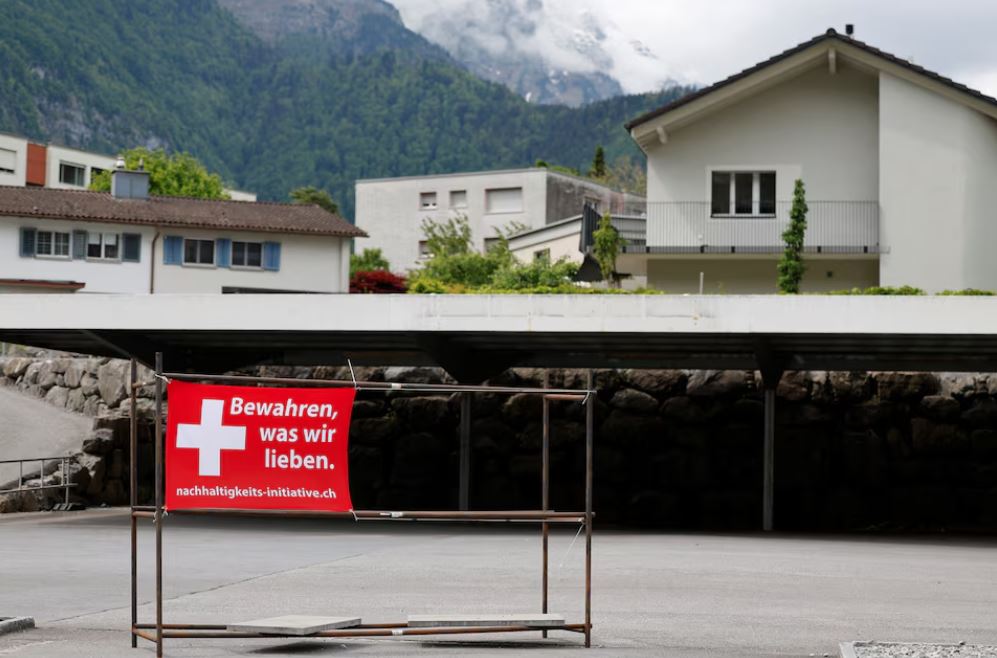
Can a country put a fixed limit on its population? That is the question Switzerland will be answering today when voters go to the polls to decide on a proposal to cap their population at 10 million, a move that has exposed divisions about immigration in the Alpine nation.
The move is backed by the right-wing Swiss People’s Party, which describes it as a “sustainability initiative” aimed at easing pressure on housing, public services and the environment. However some voters see this as the party’s latest anti-immigration move.
Dubbing it a “chaos initiative”, the government, other political parties, business leaders and trade unions argue it will deprive hospitals and hotels of much needed staff, and damage hard-won relations with the European Union, leaving non-EU member Switzerland isolated in a very risky world.
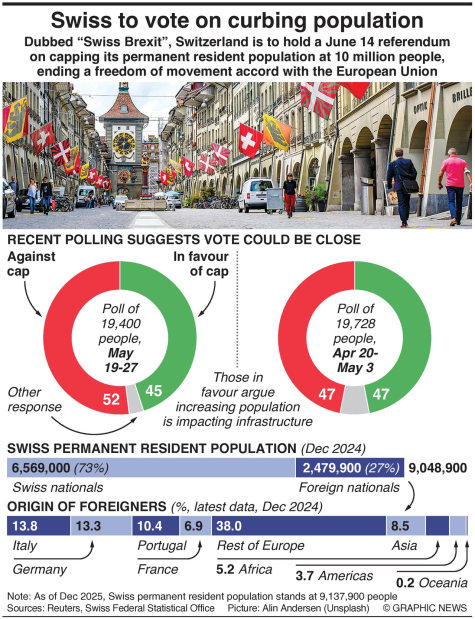
Switzerland’s population has grown rapidly since 2002, when it stood at 7.3m. Now it is 9.1m, 27 per cent of whom are Swiss residents who were born abroad.
Switzerland’s system of direct democracy means all major decisions are taken via the ballot box. Campaigners simply have to gather 100,000 signatures to ensure a nationwide vote.
Many voters are concerned by overcrowded trains, expensive apartments and rising healthcare costs.
The latest opinion polls indicate this could be a very close vote.
They suggest voters are inching towards a no vote by a wafer thin margin, with 52pc opposed – but polls remain divided, with 45pc saying they are in favour of the proposal and a significant number of voters still undecided.
For voters who have not yet made up their minds, a key question is how exactly a population cap would work.
Putting a hard limit on the number of residents is not a measure any other country has tried, although China, through its now abandoned one-child limit, did try to slow population growth.
The Swiss proposal says the population must not exceed 10m before 2050, and orders the government to take measures once the figure of 9.5m is reached.
Such plans could include limiting the number of people granted asylum in Switzerland, and ending family reunification rights for foreign workers.
If the 10m cap were to be reached, international agreements which Switzerland has signed up to, including the EU’s free movement of people, would have to be terminated.
This prospect has caused alarm at Switzerland’s business association, Economiesuisse.
Its chief economist Rudolf Minsch says that if the motion is passed, Switzerland “could face challenges in our relations with the European Union”.
That is because Brussels has long warned non-EU members that they cannot simply cherry-pick the advantages of the EU’s single market, and wriggle out of commitments like free movement of people.
&uuid=(email))