

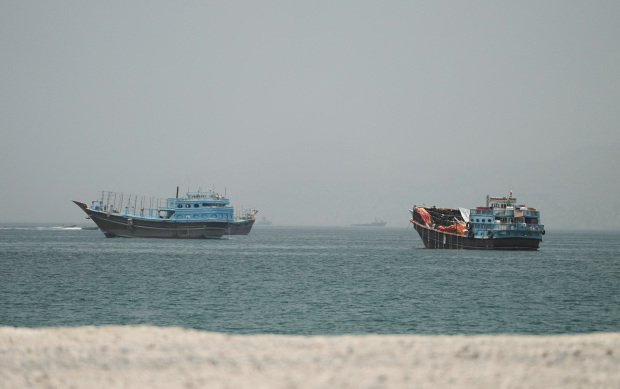
Ships have begun sailing through the Strait of Hormuz under a new scheme by the UN’s shipping agency to evacuate vessels trapped there by the conflict, a spokesperson said yesterday.
The initiative, which has taken months to conclude, will enable hundreds of ships with some 11,000 seafarers stranded in the Gulf to sail through Hormuz, the International Maritime Organisation said on Tuesday.
“Ships have already begun to pass under the plan,” an IMO spokesperson said yesterday, declining to provide any details of the vessels that had crossed.
At least two dry bulk ships and one cargo ship have sailed through Hormuz under the scheme in the past 12 hours, LSEG ship tracking data showed yesterday.
Three stranded tankers carrying 5 million barrels of crude oil were also exiting the Strait, with two heading to Asia, shipping data showed. It was not clear if these vessels sailed out under the IMO scheme.
At least 35 smaller ships, mainly dry bulk, cargo and container vessels as well as five oil tankers and tugs, were preparing to sail through the Strait, according to LSEG and MarineTraffic ship tracking data based on Reuters analysis of ship movements.
Under the scheme, which the IMO said was able to begin after the US and Iran reached a ceasefire framework, vessels will be able to use two temporary tracks to sail out – a northern route via Iranian waters and a southern route via “Oman/United States-co-ordinated waters.”
“Vessels should wait for instructions before proceeding,” the IMO said in a note on the scheme issued yesterday.
“Crowding the waiting area will only result in the need to pause further notifications for the safety of navigation.”
The so-called Traffic Separation Scheme, adopted by the IMO in 1968, established routing lanes through Iranian and Omani waters in the Strait. This central section is currently not usable due to the risk of mines, shipping and maritime security sources said.
Other Hormuz traffic has picked up in recent days, with voyages averaging over 25 ships daily in recent days versus around 10-11 vessels daily before that, according to Kpler analysis. It is still a fraction of the average daily sailings of 125 ships before the conflict began on February 28.
More ships have been switching on their public AIS tracking transponders, but some may have gone undetected due in part to major disruption of AIS signals as well as ships not showing their movements through the strait.
&uuid=(email))