

The US military said it struck Iran again, hours after a tanker was hit in the Strait of Hormuz, in the worst escalation since the two sides signed an interim peace deal two weeks ago.
Each of the warring sides has accused the other of violating the agreement reached two weeks ago to end the four-month-old conflict.
US Central Command said early today its forces carried out fresh strikes after a Panama-flagged tanker was attacked by an Iranian drone earlier in the day.
In Iran, state broadcaster IRIB said that explosions were heard in Sirik in southern Iran, without providing further details.
“Iran was given a chance to honour the ceasefire agreement but elected not to,” US Central Command said in a statement. It said the strikes were ‘in direct response to continued Iranian aggression against commercial shipping’ and targeted Iranian military surveillance, communications, air defence, drone storage and mine-laying facilities.
A US defence official later reported that the strikes on Iranian targets were complete, according to Fox News.
Washington said earlier that it hit Iranian targets overnight. Iran said it responded by striking targets linked to US forces.
Yesterday’s attack on a tanker in the strait followed another on a cargo ship on Thursday that triggered the latest escalation.
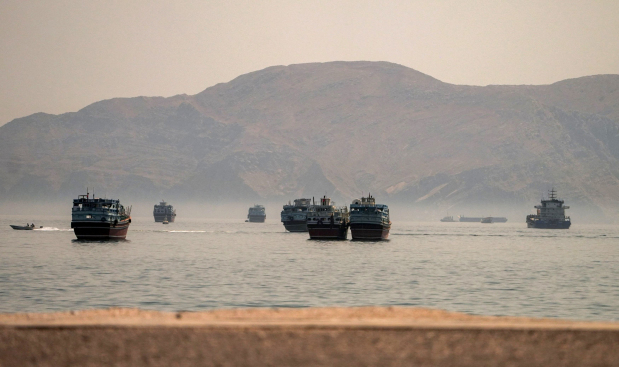
Iran has made a fresh bid to assert control over the world’s most important energy shipping route, which has begun to reopen after months of disruption.
Britain’s UKMTO maritime security agency said the tanker hit yesterday had sustained damage to its bridge, with all crew reported safe.
The Joint Maritime Information Centre, run by a coalition of navies protecting shipping, raised its security threat level as a result of recent incidents.
Iran has not directly commented on reports of specific attacks on ships. But Iranian state television reported that the Revolutionary Guards fired ‘warning shots’ toward unspecified vessels attempting to pass through channels not approved by Iran, and that this was now prompting other ships to seek Iranian permits before attempting to cross the strait.
Earlier, Iran’s foreign ministry said it launched ‘defensive’ attacks on US-linked military targets, while Bahrain, which hosts the US Navy’s regional headquarters, reported an Iranian drone attack.
The US military did not immediately respond to the reports.
Iran has accused the United States of not upholding the interim agreement, in particular by not sustaining a promised ceasefire in Lebanon, which Israel invaded in March in pursuit of Hizbollah.
Iran has also struck neighbouring Gulf states.
Bahrain said Iran’s latest attacks violated the memorandum of understanding.
Hundreds of ships, including tankers laden with oil, have been blockaded inside the Gulf since war broke out. As they began leaving through the strait over the past two weeks, oil prices have tumbled close to pre-war levels on the resulting surge in supply.
Washington has been promoting a southern lane along the coast of Oman, while Tehran, which ultimately aims to charge fees for use of the strait, wants ships to use a northern route through its waters and under its control.
US Vice President JD Vance said the Americans had adhered to the ceasefire deal and blamed Iran for any return to conflict that might result from its actions.
“Iran signed a ceasefire agreement. We have honoured it. If they have disagreements about how the MOU is being applied, they can pick up the phone. But violence will be met with violence,” Vance said on X.
&uuid=(email))