

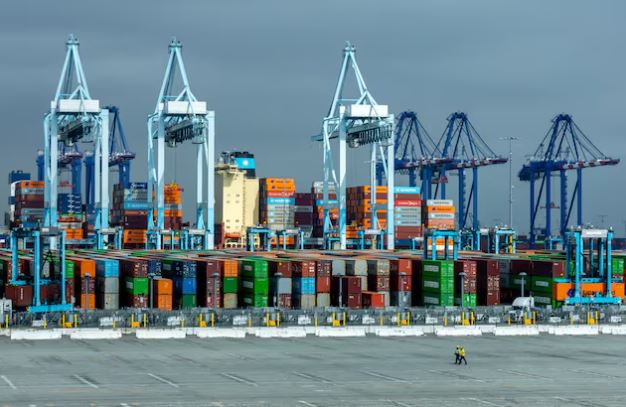
THE US trade deficit in goods swelled to a 14-month high in May as businesses boosted imports, likely to avoid shortages and higher prices related to the war in the Middle East, prompting economists to cut their growth estimates for the second quarter.
The sharp deterioration in the goods trade deficit, reported by the Commerce Department yesterday, also reflected a decline in exports. Recent business surveys have shown front-loading of orders by firms.
Sponsors of the surveys attributed the behaviour to the US-led war against Iran, which raised the prices of oil, fertilizers and other commodities and disrupted shipping in the Strait of Hormuz. But after the US and Iran last week signed a preliminary peace deal, shipments through the strait have picked up, driving oil prices sharply lower.
Even if supply chains returned to normal, economists warned that the trade deficit would likely remain elevated because of an artificial intelligence investment boom that is heavily reliant on imports.
The goods trade gap increased 27.4 per cent to $105.8 billion last month, the highest level since March 2025, the Commerce Department’s Census Bureau said. Economists polled by Reuters had forecast the deficit would be $85.0bn. Imports of goods increased $10.9bn, or 3.6pc, to $313.4bn, also a 14-month high. They were driven by a 6.3pc surge in imports of automotive vehicles.
Imports of consumer goods soared 5.7pc. Despite high inflation and household expectations that price pressures, mostly stemming from the Iran war, would remain elevated, consumer spending has stayed strong, thanks to large tax refunds this year and a stock market rally.
The dollar slipped against a basket of currencies yesterday. US Treasury yields were mostly lower.
Imports of industrial supplies, which include petroleum, increased 4.8pc. Capital goods imports rose 0.4pc. They surged 41.9pc on a year-over-year basis, reflecting the AI spending spree.
Imports of foods, feeds and beverages increased 4.3pc, while those of other goods advanced 11.5pc. Overall imports have remained high despite tariffs imposed by the Trump administration. President Donald Trump has defended the duties as necessary to protect domestic manufacturing and reduce the trade deficit.
Goods exports dropped $11.8bn, or 5.4pc, to $207.7bn in May. They were weighed down by a 9.2pc plunge in exports of consumer goods. Industrial supplies exports tumbled 7.0pc, while those of capital goods dropped 5.0pc. Exports of other goods decreased 6.8pc. But food, feed and beverage exports increased 3.9pc. Automotive vehicle exports rose 0.5pc.
&uuid=(email))