

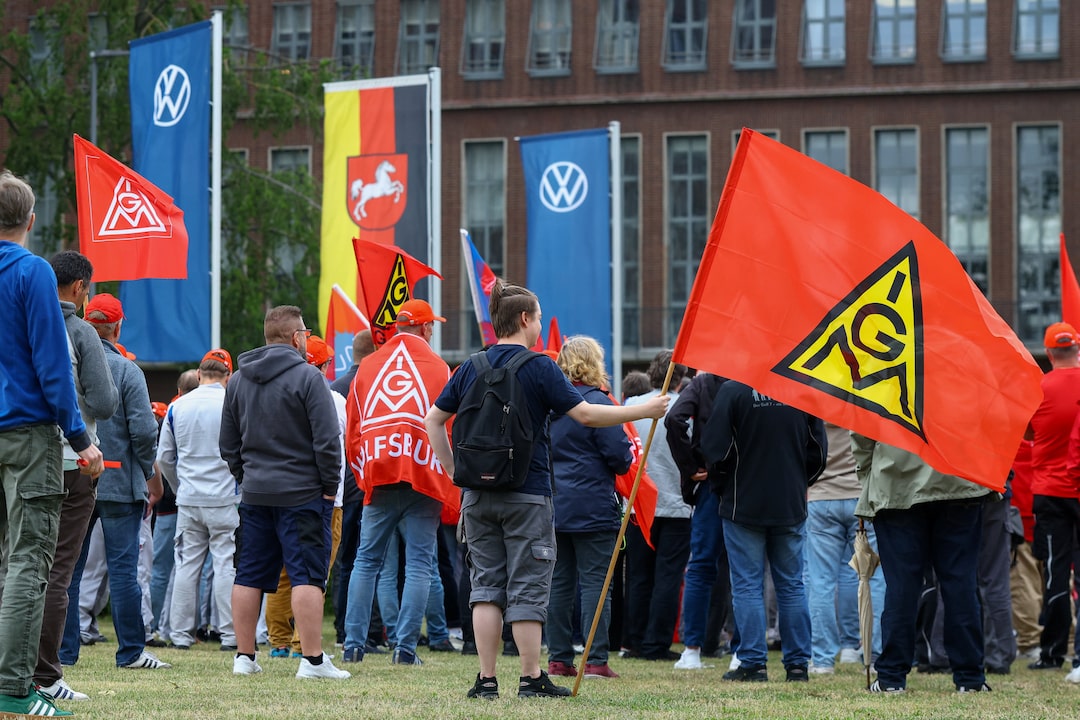
Volkswagen’s plan to cut up to 100,000 jobs and close four German factories faces a major test yesterday as the groups that control Europe’s largest automaker meet to discuss the proposals, while workers protest against the overhaul.
Grappling with high costs and excess capacity at home, rising Chinese competition and US import tariffs, Volkswagen is under unprecedented pressure to restructure the business model that underpinned its success for decades.
The prospect of plant closures and deep job cuts at one of Germany’s most storied companies, founded 89 years ago, also underscores the challenges for Europe’s largest economy as it struggles with weak growth and high labour and energy costs.
At a supervisory board meeting at Volkswagen’s headquarters in Wolfsburg, CEO Oliver Blume must convince the committee’s powerful labour representatives to accept deeper cuts across the group, which includes the Audi and Porsche brands.
He is also under pressure from the Porsche and Piech owner families, whose core investments have lost tens of billions of euros in market value in recent years.
In Wolfsburg, workers blew whistles, waved red union flags and marched behind a banner reading “strong together” .
The IG Metall union said around 400 people were demonstrating in Wolfsburg alone, with union representative Thorsten Groeger warning the company risked a “major conflict” with workers. Volkswagen faced mass warning strikes in December 2024, but there is currently an agreement for workers not to take industrial action while existing work contracts are in force.
&uuid=(email))