

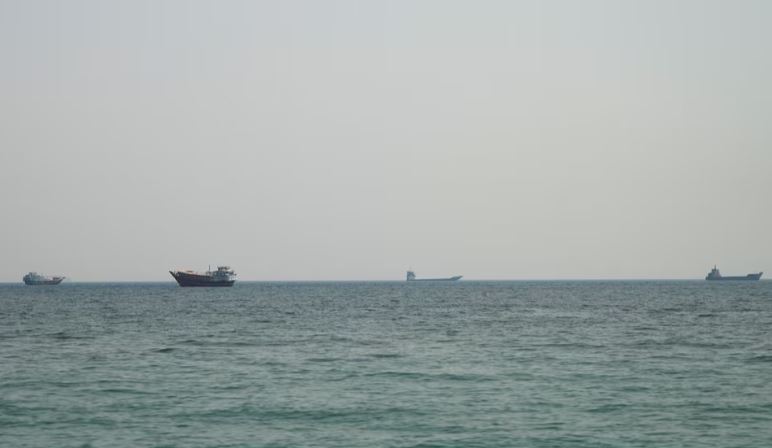
US and Iranian forces have exchanged heavy missile and drone assaults, with Tehran targeting states across the Gulf yesterday and saying it had again closed the vital Strait of Hormuz.
The strikes were the latest in a cycle of attacks and counter-attacks as Iran seeks to assert control over shipping through the strait. However, the barrage marked an escalation in pace and range.
US Central Command, however, said its forces were positioned to safeguard freedom of navigation despite what it described as ‘aggression, harassment, threats, and arbitrary declarations’ from Iran.
“Iran does not control the strait. Traffic is flowing,” it said.
The US Navy-led Joint Maritime Information Centre reiterated guidance that, despite a severe security threat, an ‘expanded’ southern route near Oman was available for two-way traffic.
Central Command said US forces launched more strikes yesterday after hitting 140 Iranian military targets on Saturday and more than 300 over three nights of strikes ‘to degrade Iran’s ability to attack civilian mariners and commercial vessels freely transiting the strait’.
Qatar, which has previously said it would not act as a mediator so long as it was under attack, said three people, including a child, had been injured by falling shrapnel. It said Iran was ‘fully legally responsible’ for the attack.
The UAE said it detected missile threats outside its borders, Bahrain said it intercepted several Iranian aerial attacks, Jordan reported missile strikes and Oman reported being targeted with drones.
Bahrain condemned the Iranian attacks, calling them a dangerous escalation that threatens regional security.
&uuid=(email))