

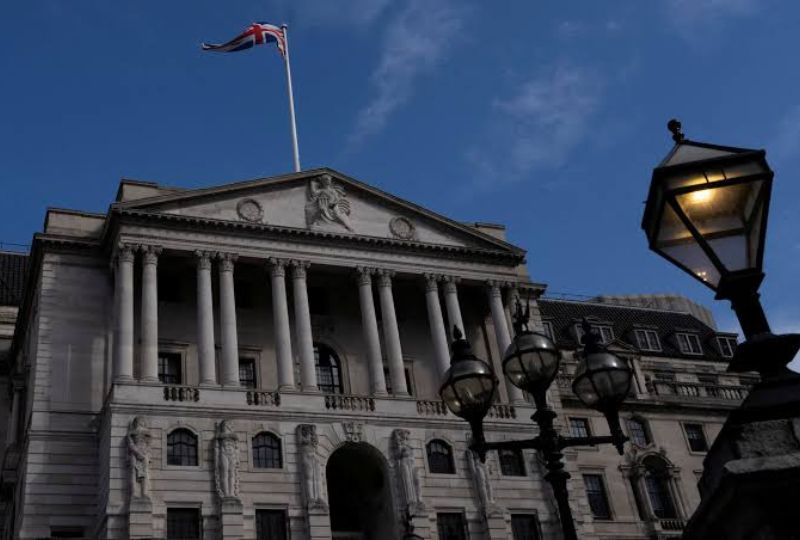
THE Bank of England raised interest rates for the first time in over three years yesterday and warned that at least one more increase was likely if the US-Iran conflict continues, as it started on a path that its main peers have already embarked on.
British inflation is likely to reach around 5 per cent in the middle of next year, the BoE said, more than double the central bank’s target and a blow to Prime Minister Andy Burnham, who has sought to ease cost of living pressures.
While there was little evidence so far of faster inflation outside sectors directly affected by higher energy costs, the BoE said the amount of inflation pressure coming down the road from months of high energy prices required a rate rise now, even though that will increase borrowing costs for businesses and many home-owners.
“Today’s increase should not be seen as the first in an inevitable long sequence of hikes. That is not inevitable. But unless the conflict in the Middle East is resolved, neither does it seem likely to be the last increase,” Governor Andrew Bailey said in his opening remarks at a press conference.
The central bank’s Monetary Policy Committee voted 8-1 to raise rates to 4pc from 3.75pc, but in contrast to expectations in a Reuters poll, the dissent came not from a policymaker seeking to keep rates on hold but one seeking a bigger hike.
Catherine Mann, who said last month that the BoE had been slow to reassure markets that it had a grip on inflation, voted for a half-point interest rate increase to 4.25pc.
Sterling strengthened against the US dollar after the decision and two-year British government bond yields – which are sensitive to expectations of future rate moves – rose by a relatively sizeable 5 basis points.
“Today’s (rate) move still feels like a measured, credibility-preserving one rather than the start of an aggressive cycle. Inflation is elevated, but the evidence that it is broadening beyond energy remains mixed,” said Madison Faller, a global investment strategist at J.P. Morgan Private Bank.
