

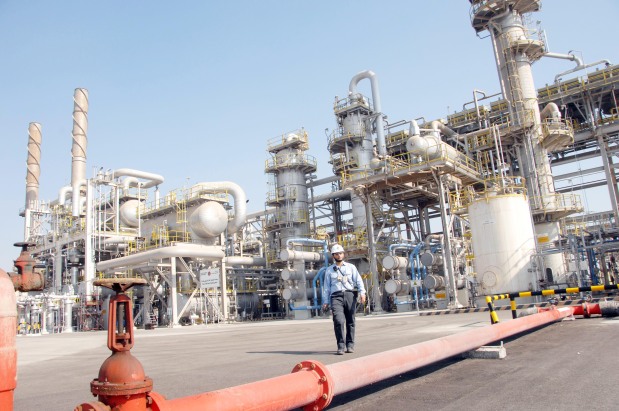
A NEW strategy to improve the quality of air in Bahrain is expected to be presented by September.
The United Nations Environment Programme (UNEP) and the Supreme Council for the Environment (SCE) are working together to pen the Air Quality Strategy, which will help lay the groundwork for new legislation to combat air pollution.
UNEP West Asia Office director and regional representative Sami Dimassi told the GDN that the plan would be implemented in phases.
He also stressed the importance of outreach and awareness programmes, which he said could be as important as legislation when it came to saving the environment.
“(The strategy) looks at the broad perspective and different sectors and comes back with different phases and stages to implement the strategy,” said Mr Dimassi.
“It will focus on a combination of things, especially for a country like Bahrain where you don’t have a heavy industry like other countries, but there is the issue of consumption, the refineries, and construction has a lot of things that need looking at.
“It’s a matter of prioritisation, we can have low hanging fruits that we can start with, meanwhile, we work in parallel on the other aspects but at least we get some things out of the way, and slowly start slicing at the issue.
“To say that you have a strategy and in one year everything will be perfect it’s not realistic, but at least one would have a roadmap and have targets, where to focus and when not focusing we can look at what went wrong and how we can do better.
“If we have already built something that has negative impact, we can’t go and destroy it but at least when we build something else we have new regulations on how to build it and what to do with it and put in place mechanisms to sustain or limit the damage.”
Mr Dimassi added that such a strategy could be successful in Bahrain because it was one of the more proactive states in the GCC and the most open for dialogue over environmental protection.
The GDN previously reported that the country planned to ensure five per cent of its total energy consumption is met through renewables by 2025, increasing to 10pc by 2035.
This target could be achieved sooner, however, as Electricity and Water Minister Dr Abdulhussain Mirza told parliament last week that their target of producing five per cent of power has already reached the halfway point in a year.
A “tender-based feed-in tariff” is also being prepared to attract private investors to develop large-scale renewable energy projects, an initiative to be implemented in several phases – with the first commencing by the end of the year.
However, in terms of combating plastic waste, which is what this year’s World Environment Day focused on and what the UNEP is basing its initiatives on, Bahrain could be facing some challenges.
“We had discussion with several ministries and there are two major issues; the economic issue because Bahrain is an oil producing country so plastic is very important,” explained Mr Dimassi.
“So for us to come to Bahrain and say stop is not just a virtual impossibility it will kill a big chunk of the economy, so what we need to do is start looking at alternatives and work with players here to find those alternatives.
Outreach
“The other aspect is cultural because in this region, it’s a consumption culture, you go to the supermarket and you end up using more bags than you need, and in order to fix this, outreach is necessary to teach people what is the issue.
“Even if we go to the government and tell them we need a policy and they find an alternative and implement a policy, the question becomes is the public ready for it?”
The SCE in co-operation with the private sector, such as LuLu Hypermarket, is already working on teaching people to use renewable bags instead of plastic when shopping.
Around 6,000 reusable bags were given out for free to shoppers to coincide with World Environment Day.
ghazi@gdn.com.bh
&uuid=(email))